AI / MLPrototype2026
Tidal
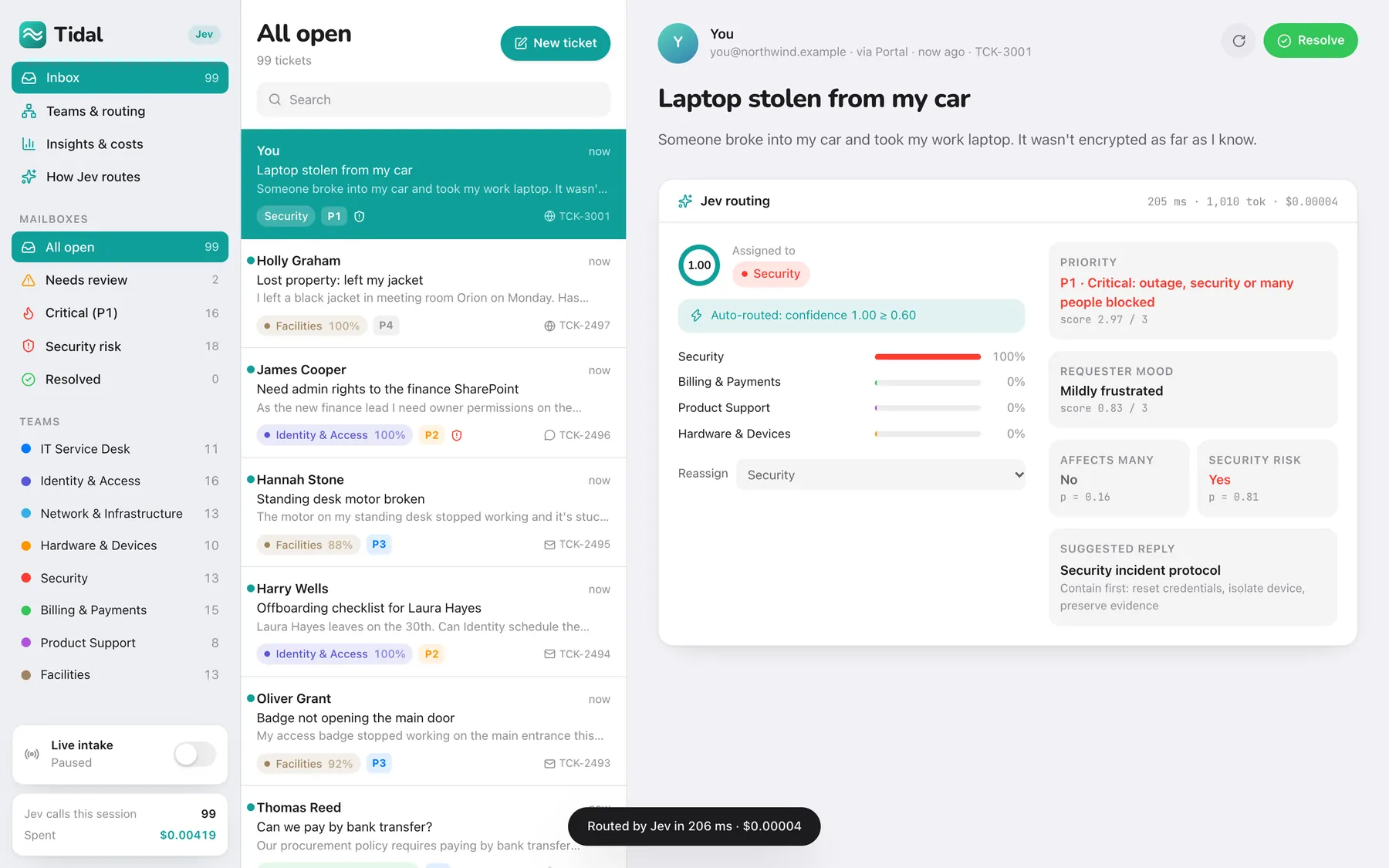
IT and support ticket routing: one TypeSafe Jev request per ticket picks the team, priority, mood and risk, and its probabilities decide when a human should step in.
- 96.9%
- Team accuracy on 96 labelled tickets
- 176 ms
- Median routing time per ticket
- 1.04 s
- To re-route the backlog after a reorg
Timeline
Oct 2026
Role
Design, routing logic and front end
Team
Solo
Domain
IT service management · Customer support
Status
Prototype
Stack
Source
Section 01
Overview
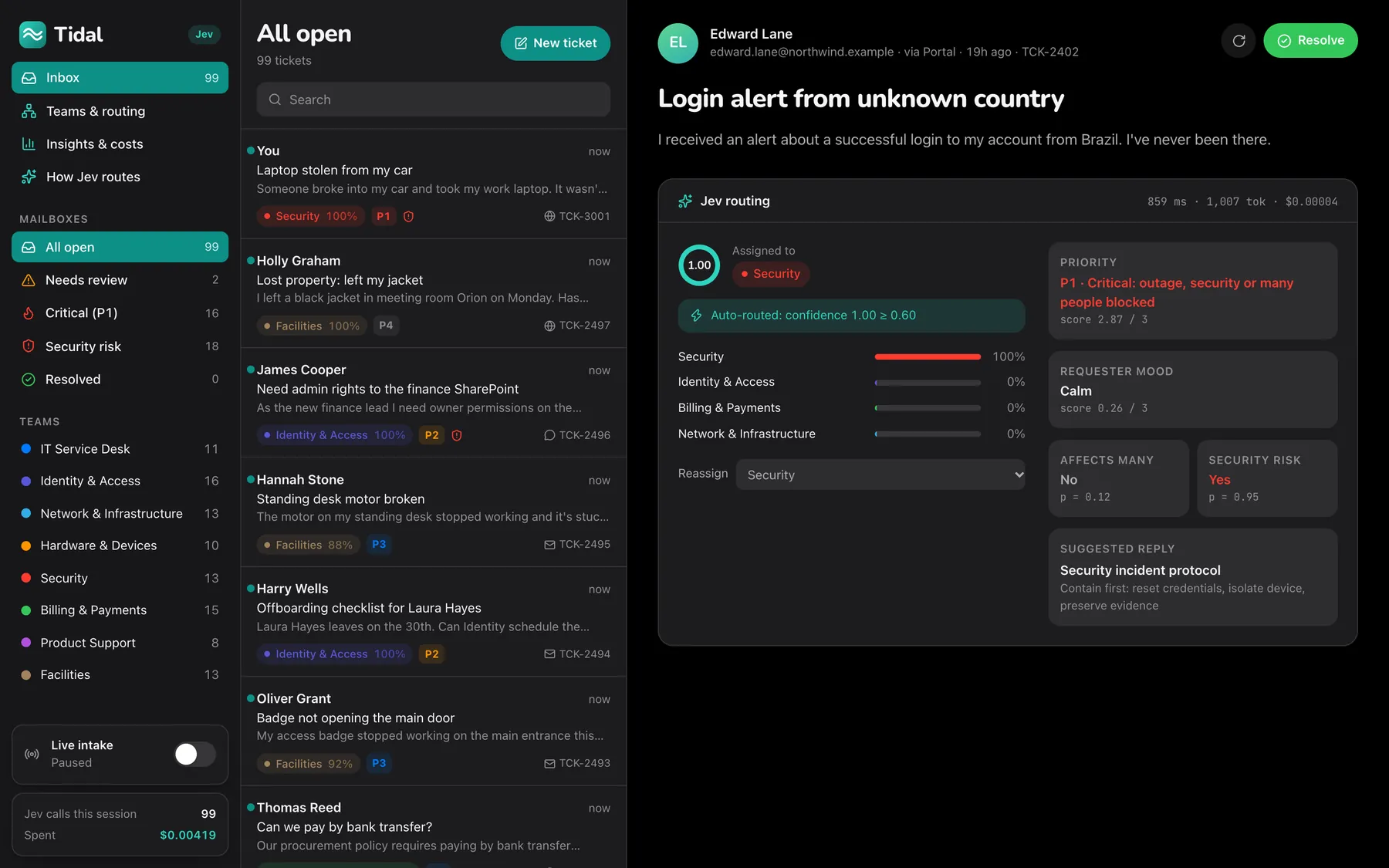
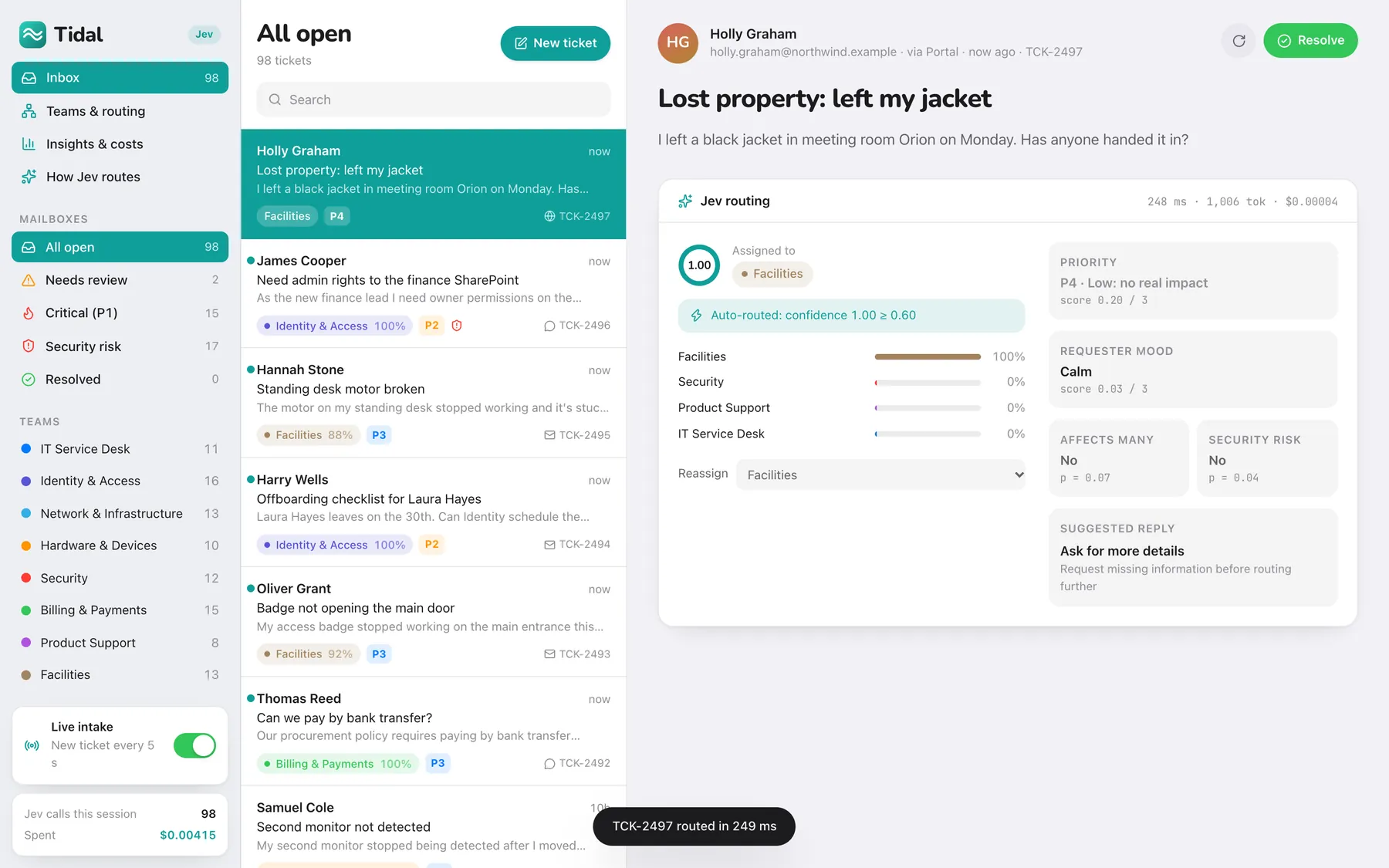
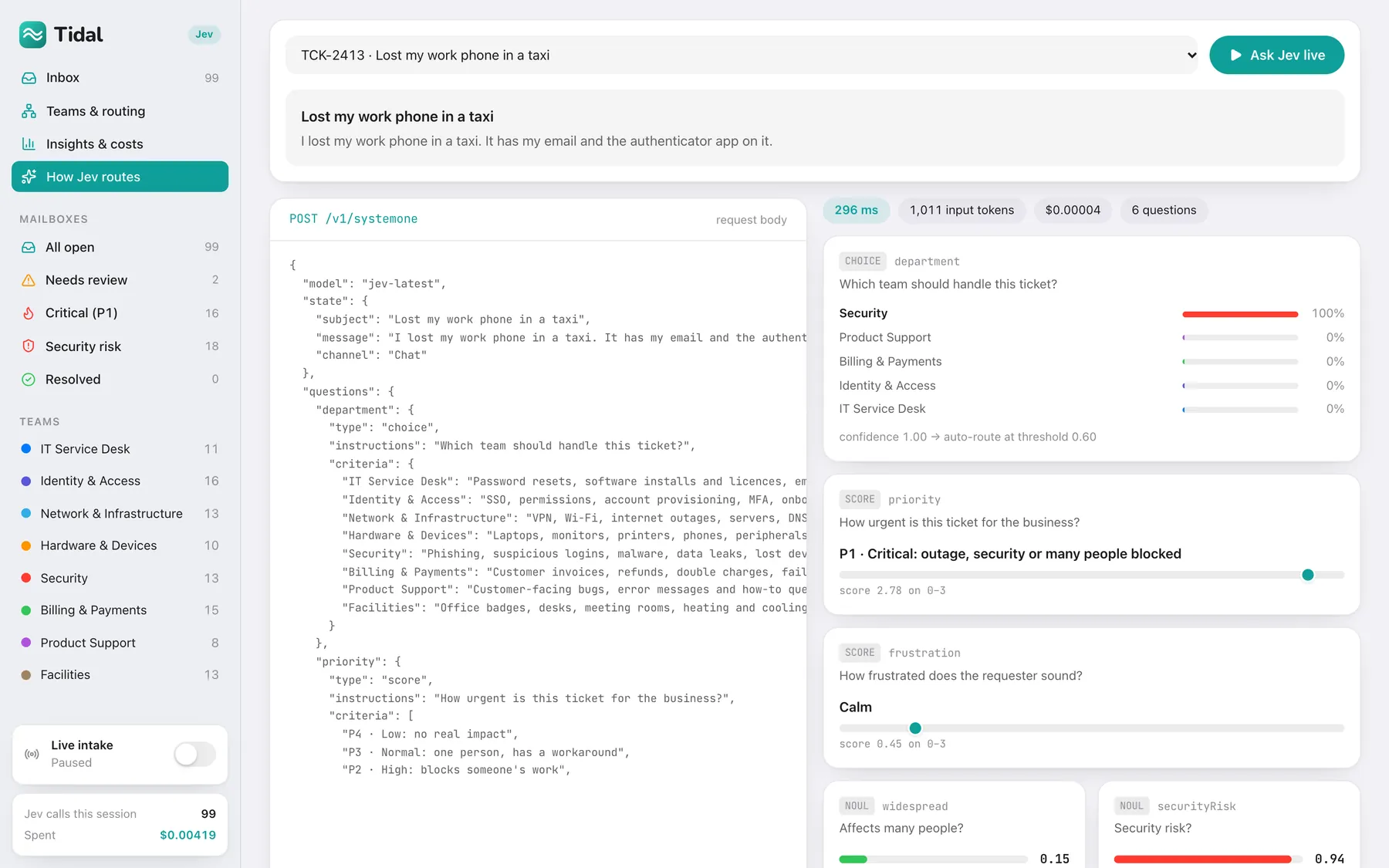
Ticket triage is repetitive, and a router that guesses is risky. Tidal sends each incoming IT or support ticket to Jev, TypeSafe's decision model, as one request with six typed questions: which team owns it (with a probability for every team), priority, the requester's mood, whether many people are affected, whether it is a security risk, and which saved reply to start from.
Because the answers are probabilities rather than generated text, the routing rule lives in plain code that anyone can read and tune.
Section 02
When a Human Steps In
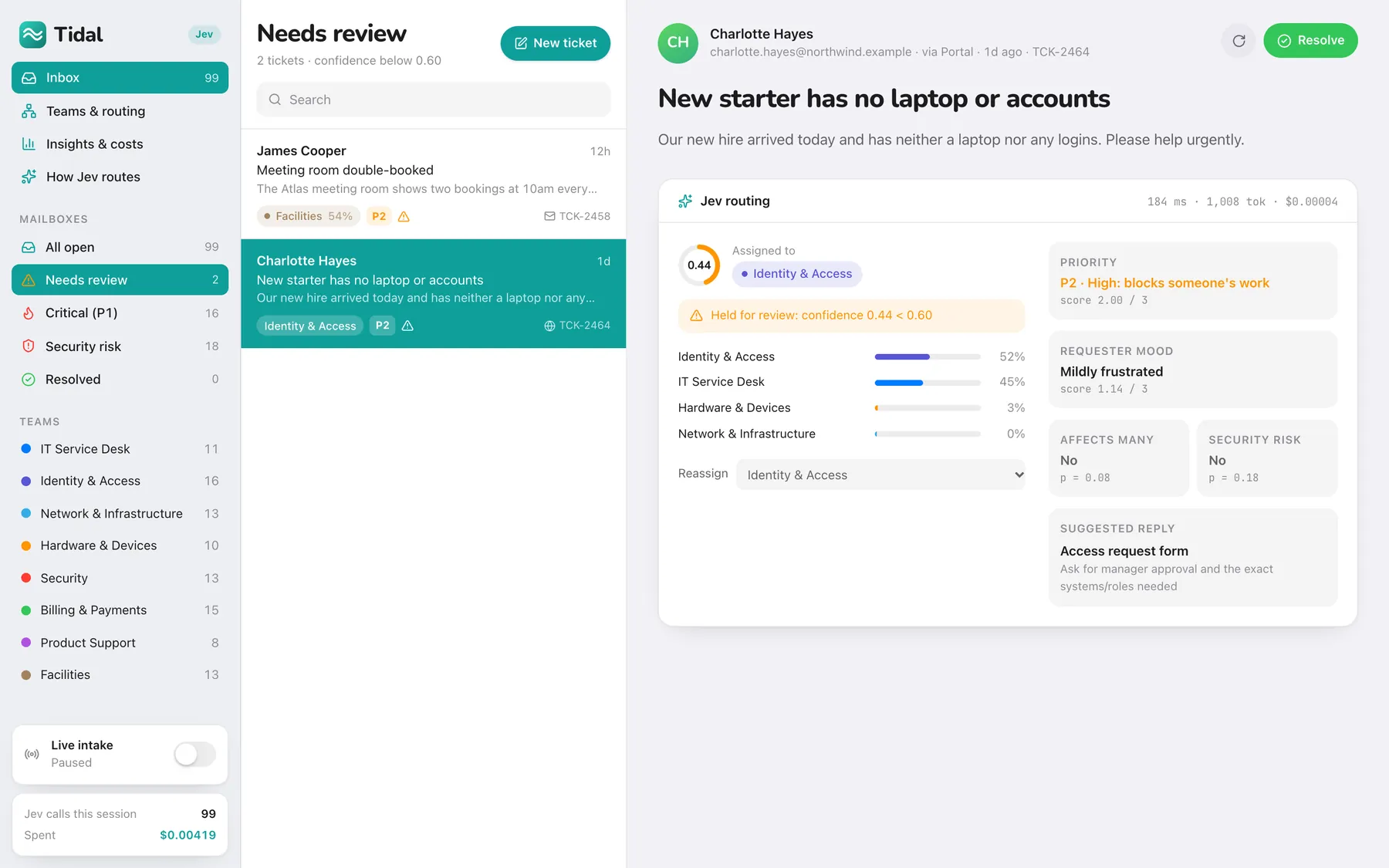
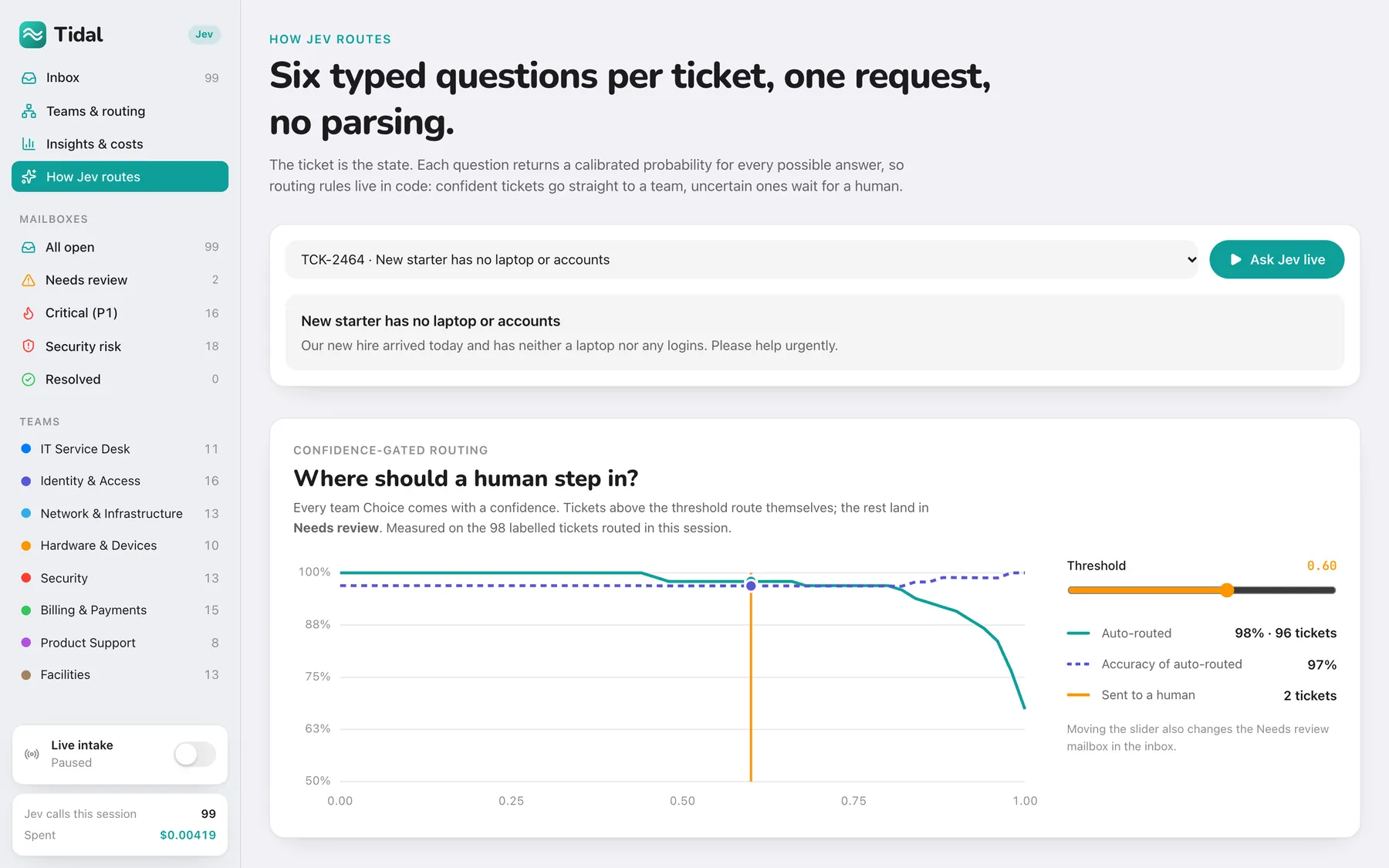
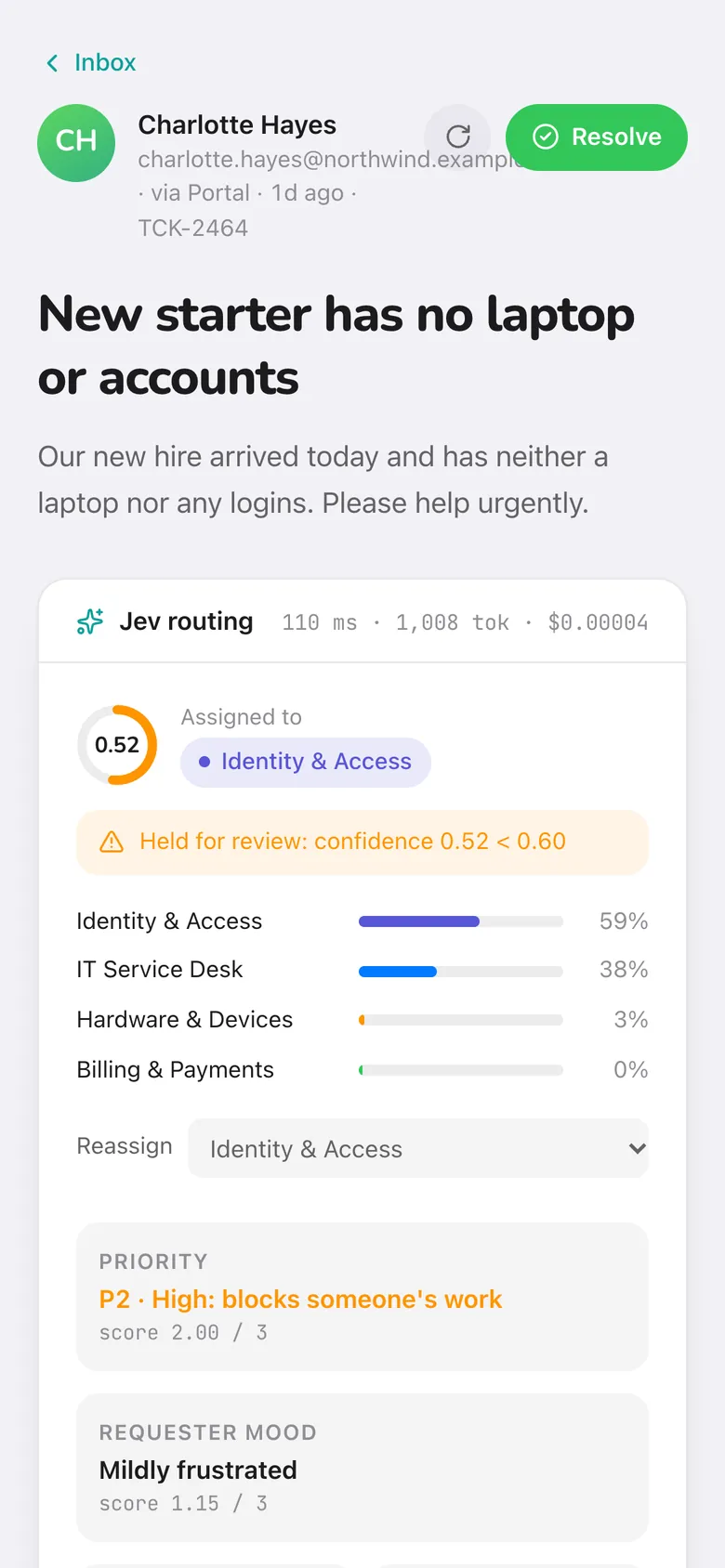
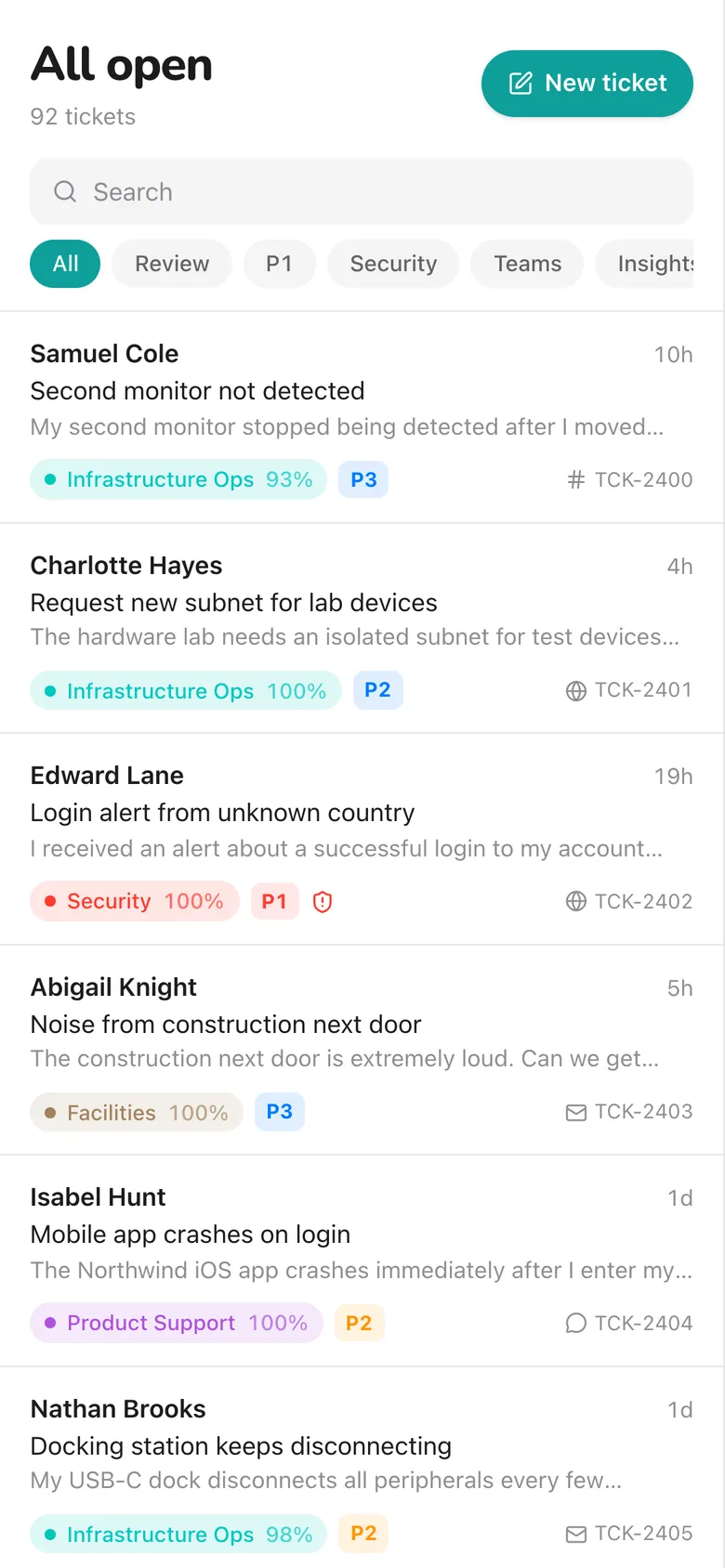
A ticket whose team confidence clears the threshold (0.60 by default) routes itself; anything below waits in a Needs review mailbox. When Jev splits a new-starter request between Identity & Access and the IT Service Desk at 52% and 45%, a person decides.
A confidence-gating chart shows the trade-off for every threshold: how much is automated and how accurate that automated slice is against hand labels.
Section 03
Org Changes Without Retraining
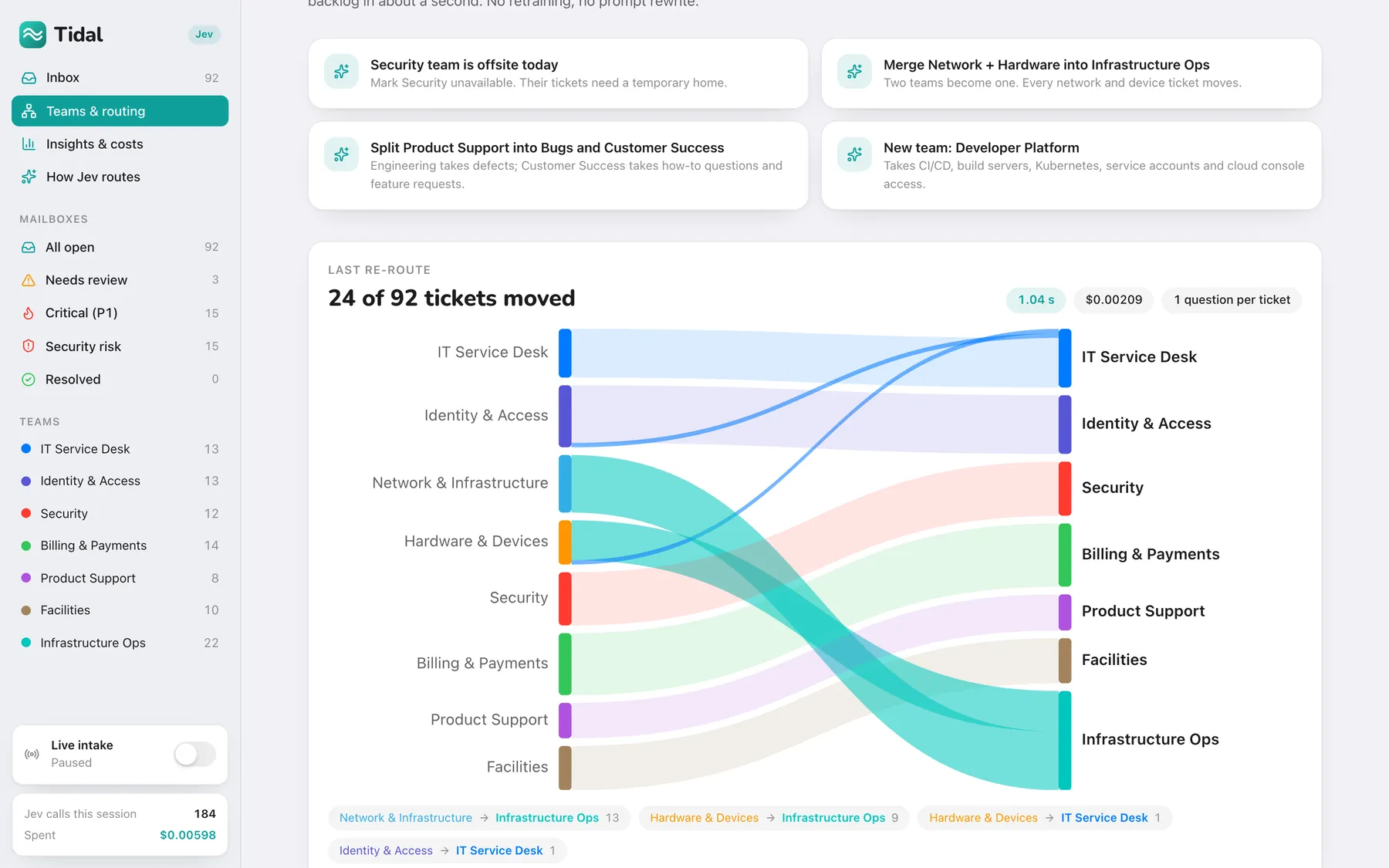
Teams change. Merge Network and Hardware into one Infrastructure team, split Product Support, or mark a team unavailable, and Tidal re-asks only the team question for every open ticket. Re-routing the 92-ticket backlog took 1.04 s and $0.0021, and a Sankey diagram shows exactly which tickets moved. There is no model to retrain because the teams are just the options in the question.
Section 04
Measured Results
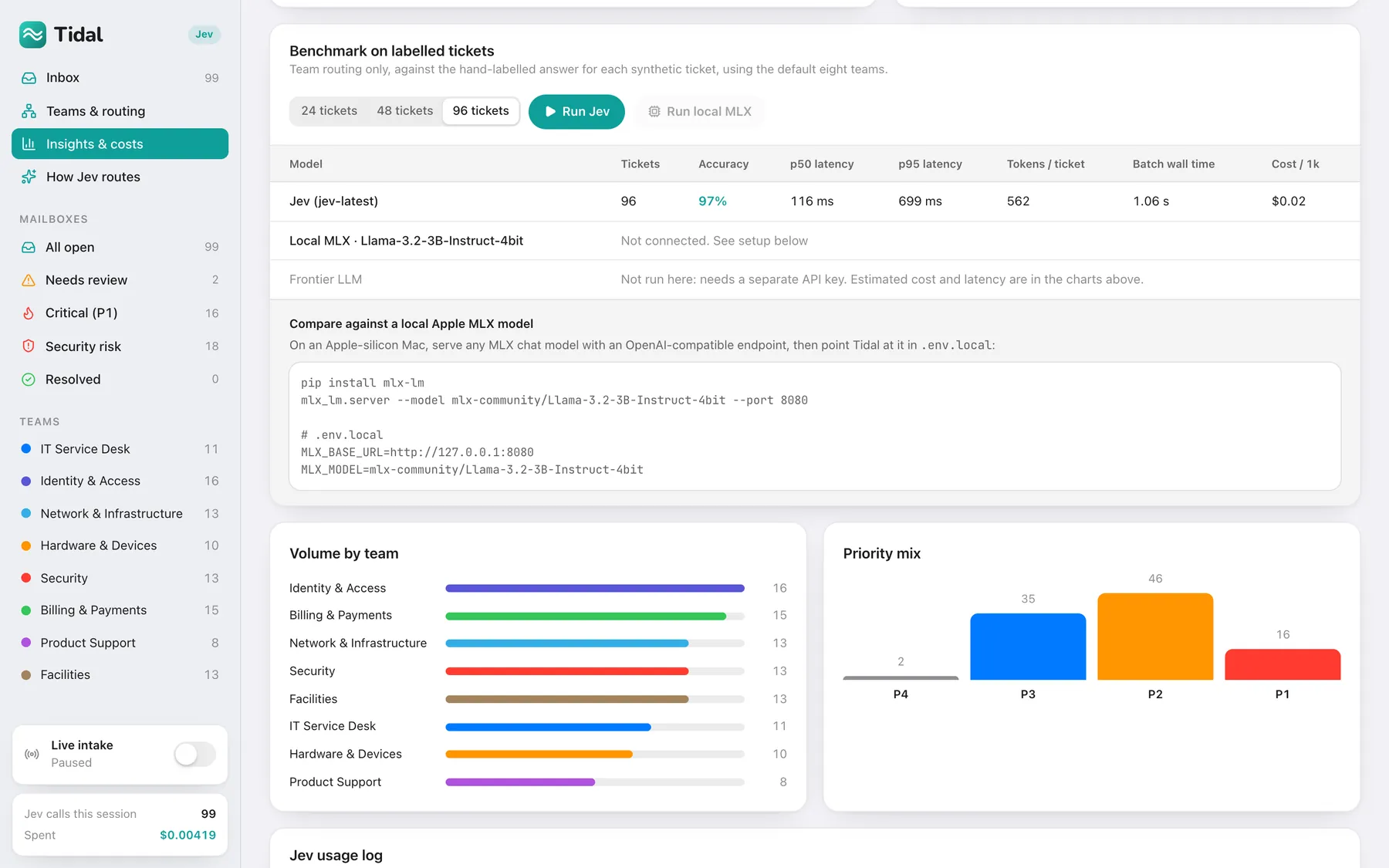
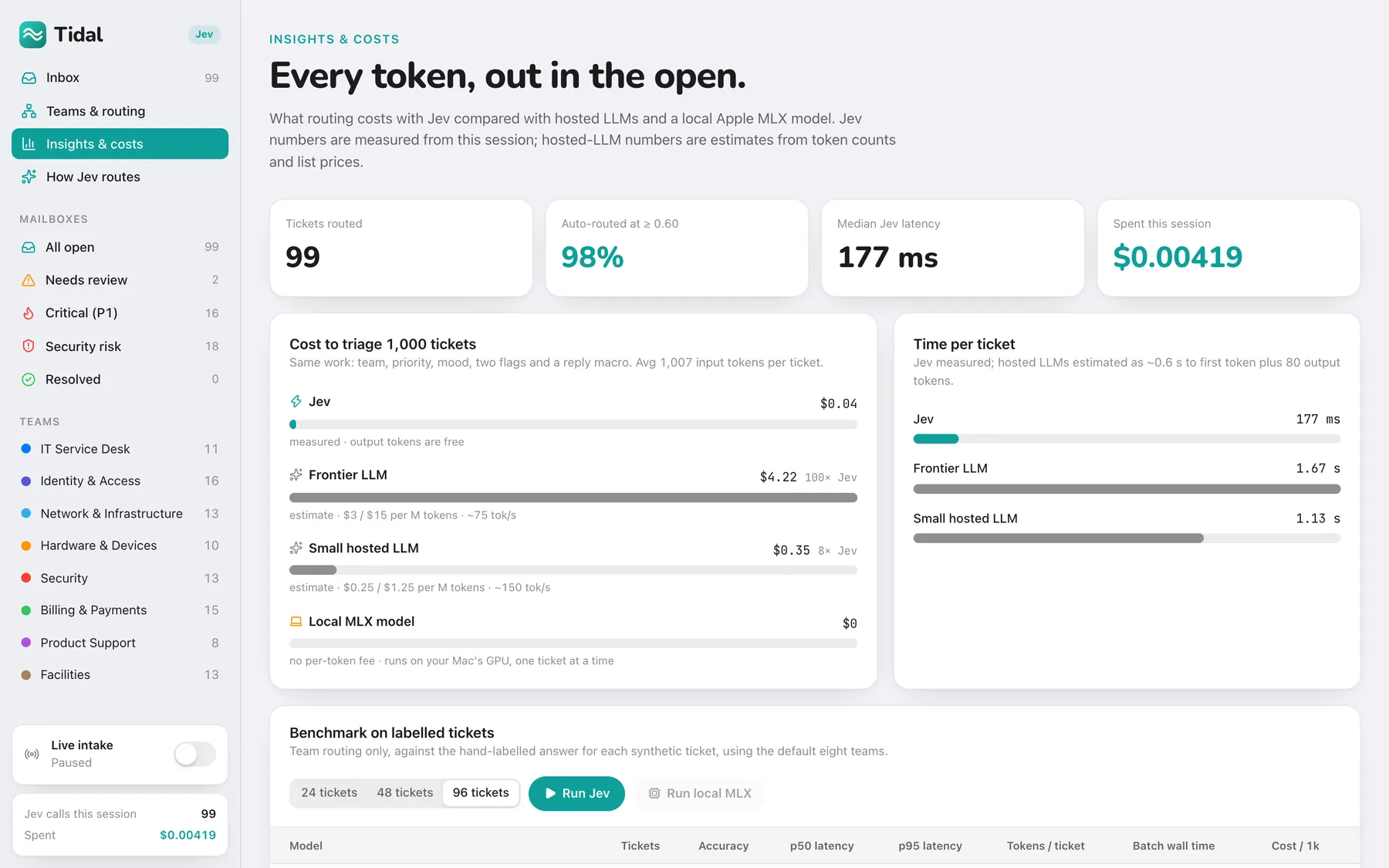
On 96 hand-labelled synthetic tickets, Jev picked the right team 96.9% of the time (93 of 96). Routing the whole 92-ticket backlog took 1.2 to 1.6 s with 24 requests in flight, a median 176 ms per ticket, about 1,000 input tokens each, and under half a cent in total.
The data also showed the limit of thresholds: the two misroutes came back at high confidence (0.82 and 0.97), so a threshold catches uncertain tickets but not confident mistakes. That is why agents can override and re-ask any ticket. The hosted-LLM costs on the Insights page are estimates from published prices.