AI / MLPrototype2026
Pulse
Live sales-call coaching: after every sentence, TypeSafe's Jev answers 12 typed questions about the prospect, fast enough to steer the rep while the call is still going.
- 12
- Typed questions after every sentence
- 230 ms
- Median analysis time, measured
- $0.0014
- Cost to analyse a full call
Timeline
Oct 2026
Role
Design, question design and front end
Team
Solo
Domain
Sales enablement · Conversation intelligence · B2B SaaS
Status
Prototype
Stack
Source
Section 01
Overview
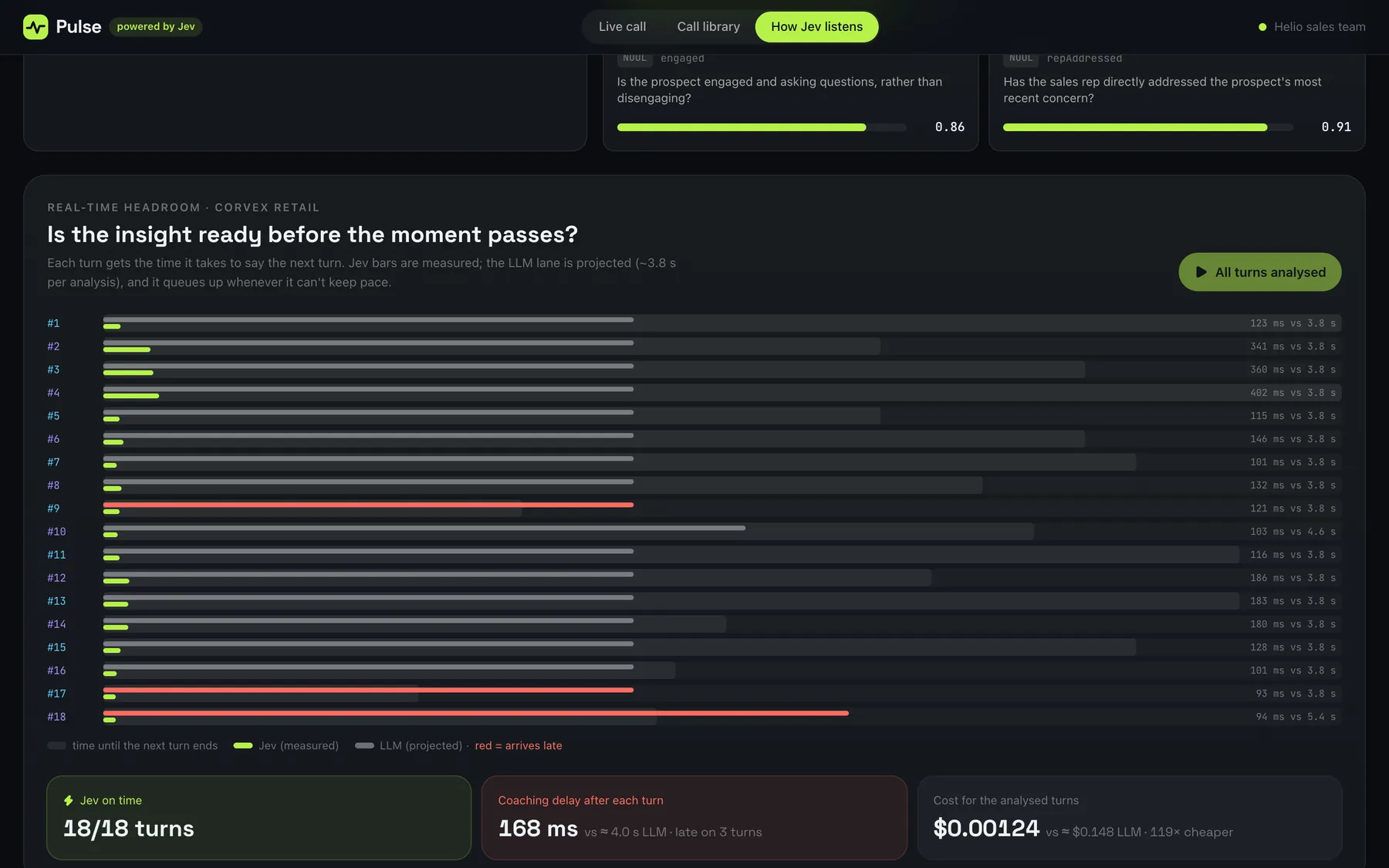
Coaching a sales rep mid-call only helps if the insight lands before the moment passes. An LLM that writes JSON takes seconds per analysis and falls behind the conversation.
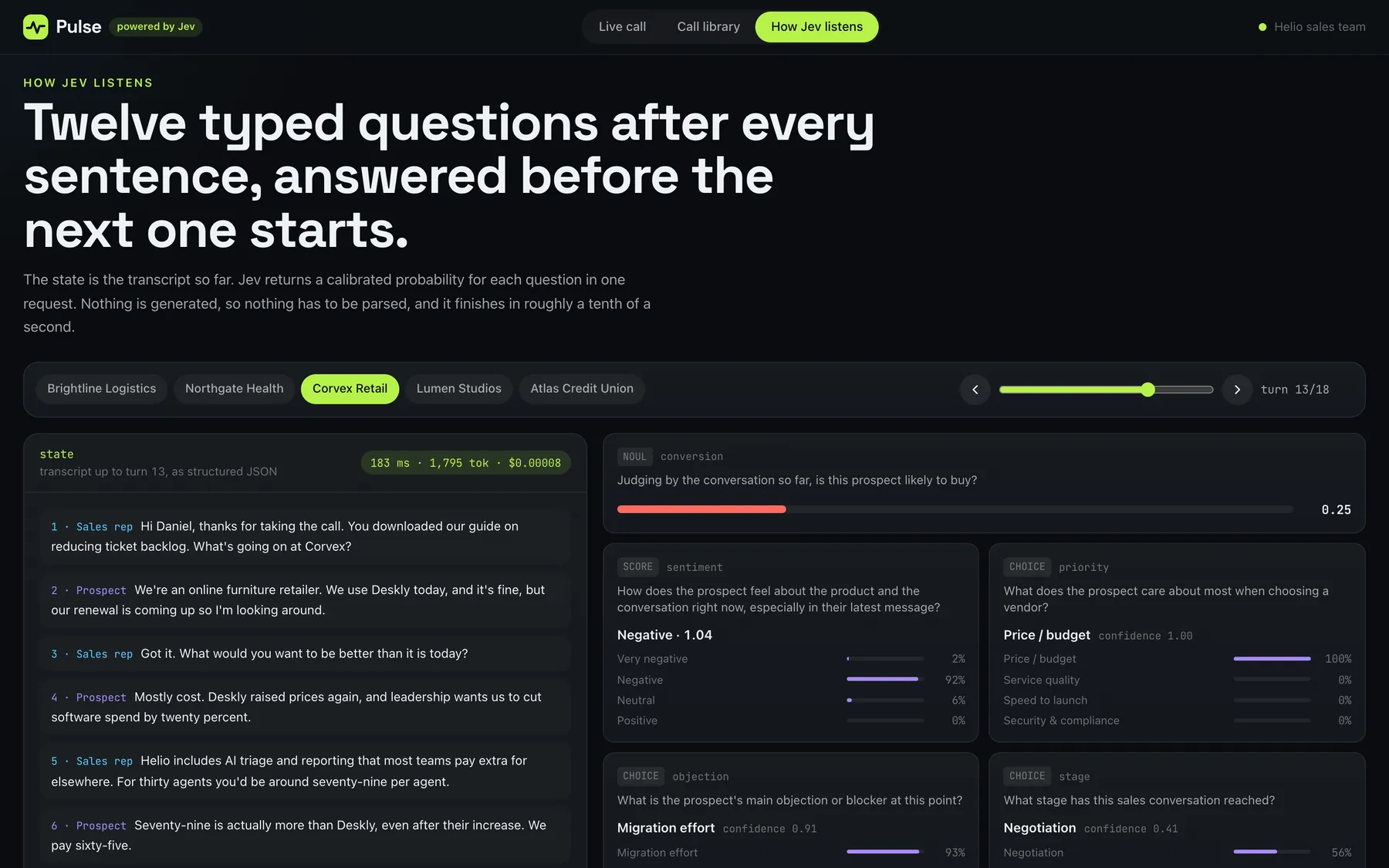
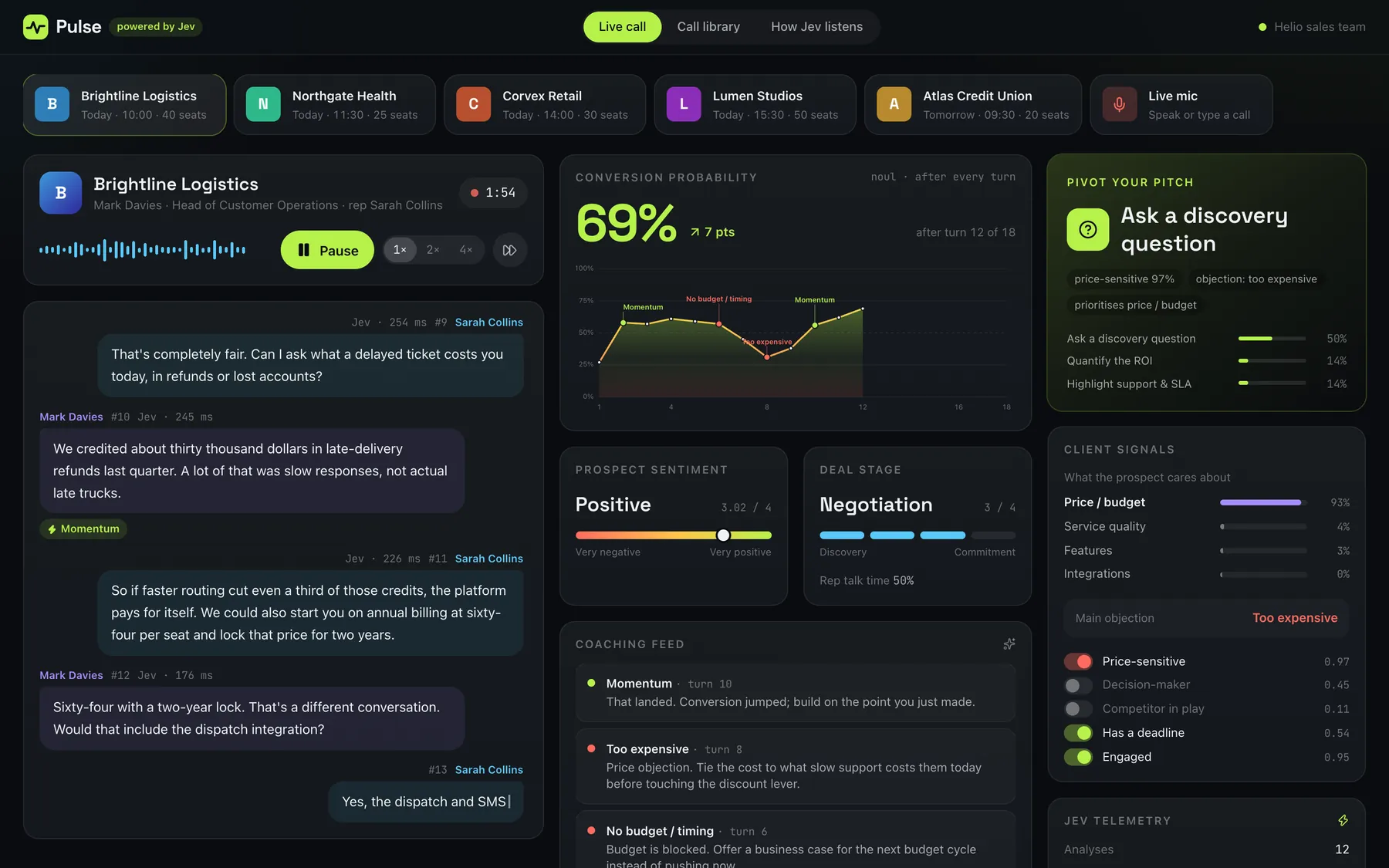
Pulse reads the transcript after every finished sentence and sends one request to Jev, TypeSafe's decision model, with 12 typed questions: how likely the prospect is to buy, how they feel, what they care about, their main objection, the deal stage, the rep's best next move, and six yes/no signals such as price sensitivity, urgency and competitor mentions. The answers drive a conversion line, a "Pivot your pitch" card and a coaching feed.
Section 02
A Call, Turn by Turn
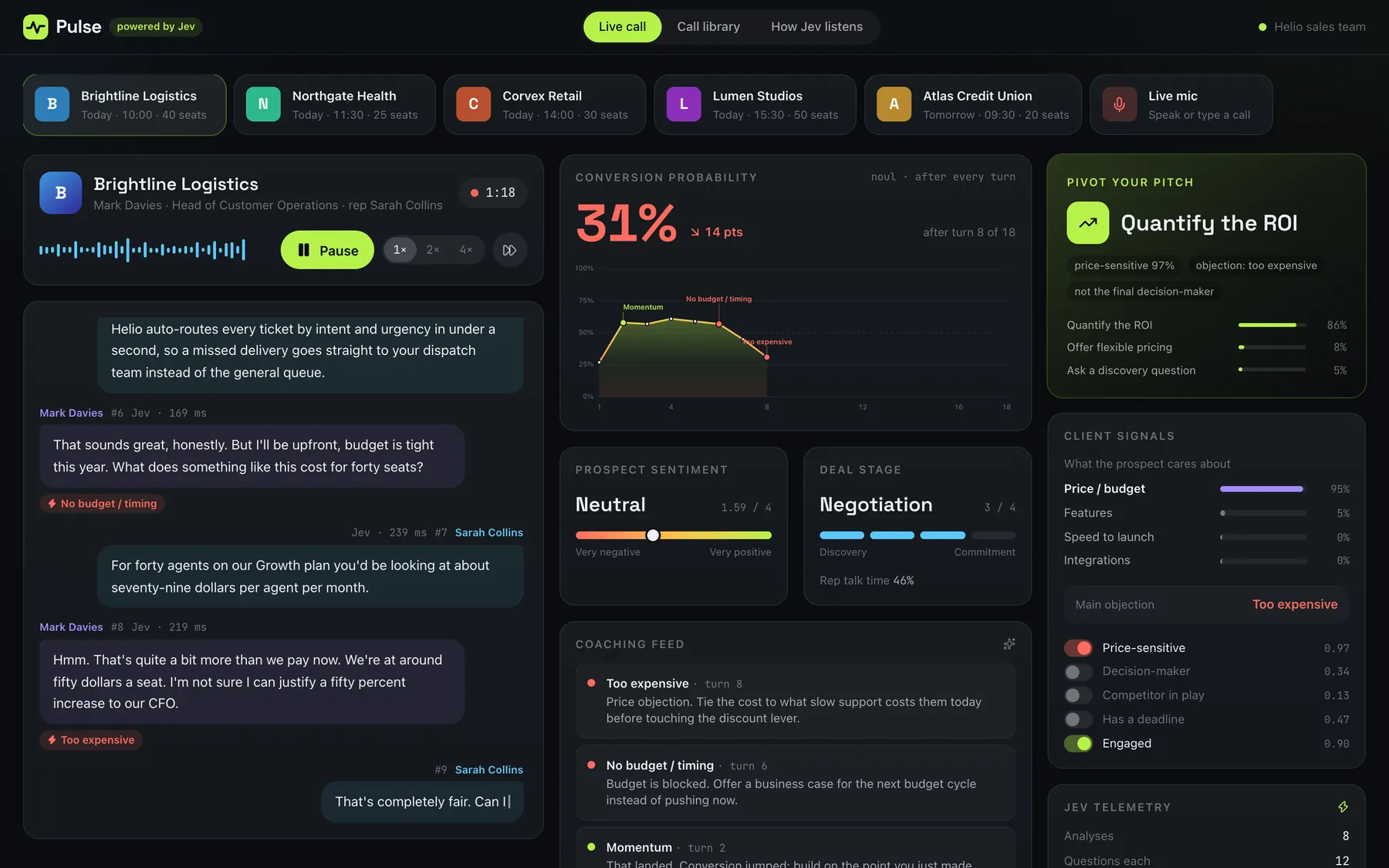
In the Brightline call, conversion starts at 27%, climbs to about 60% during discovery, then drops to 31% when the prospect balks at a 50% price increase. Jev's top recommendation switches to "Quantify the ROI". Four turns later the refund maths and a two-year price lock bring it back to 69%, and the call ends at 83% with a meeting booked.
Turn-to-turn changes are compared in plain code, which pins moments on the chart (momentum, objections, buying signals) and adds a coaching nudge.
Section 03
After the Call
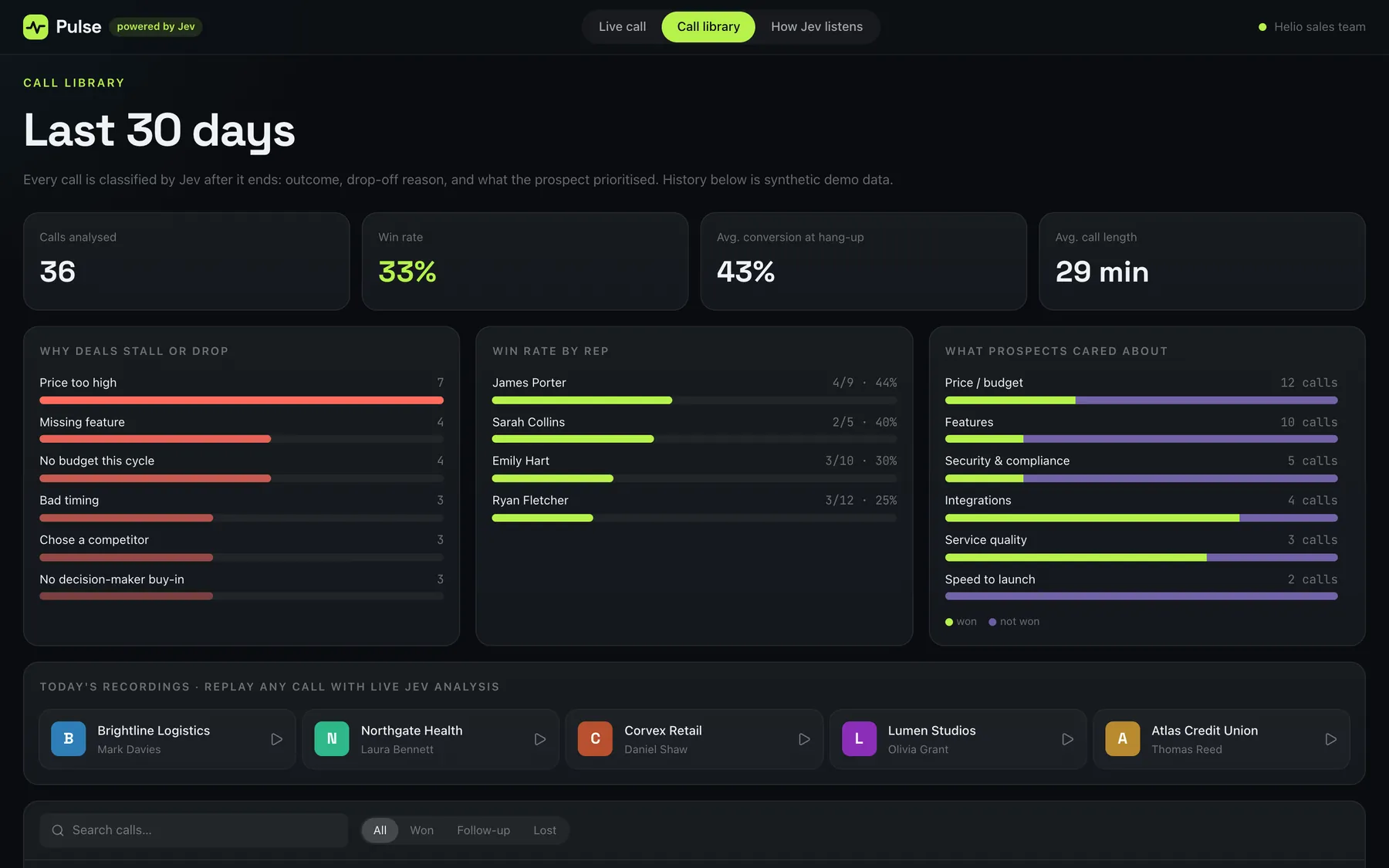
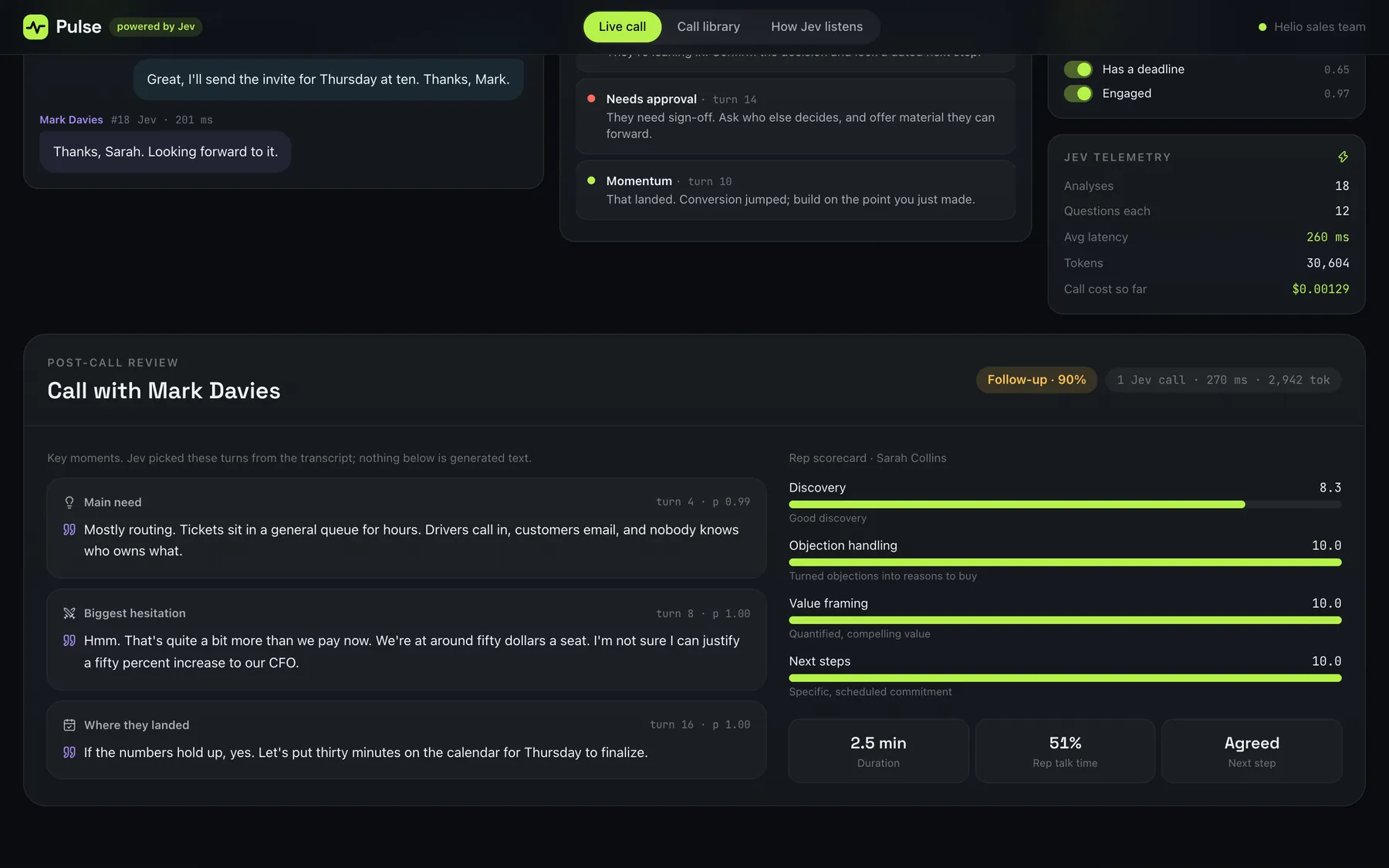
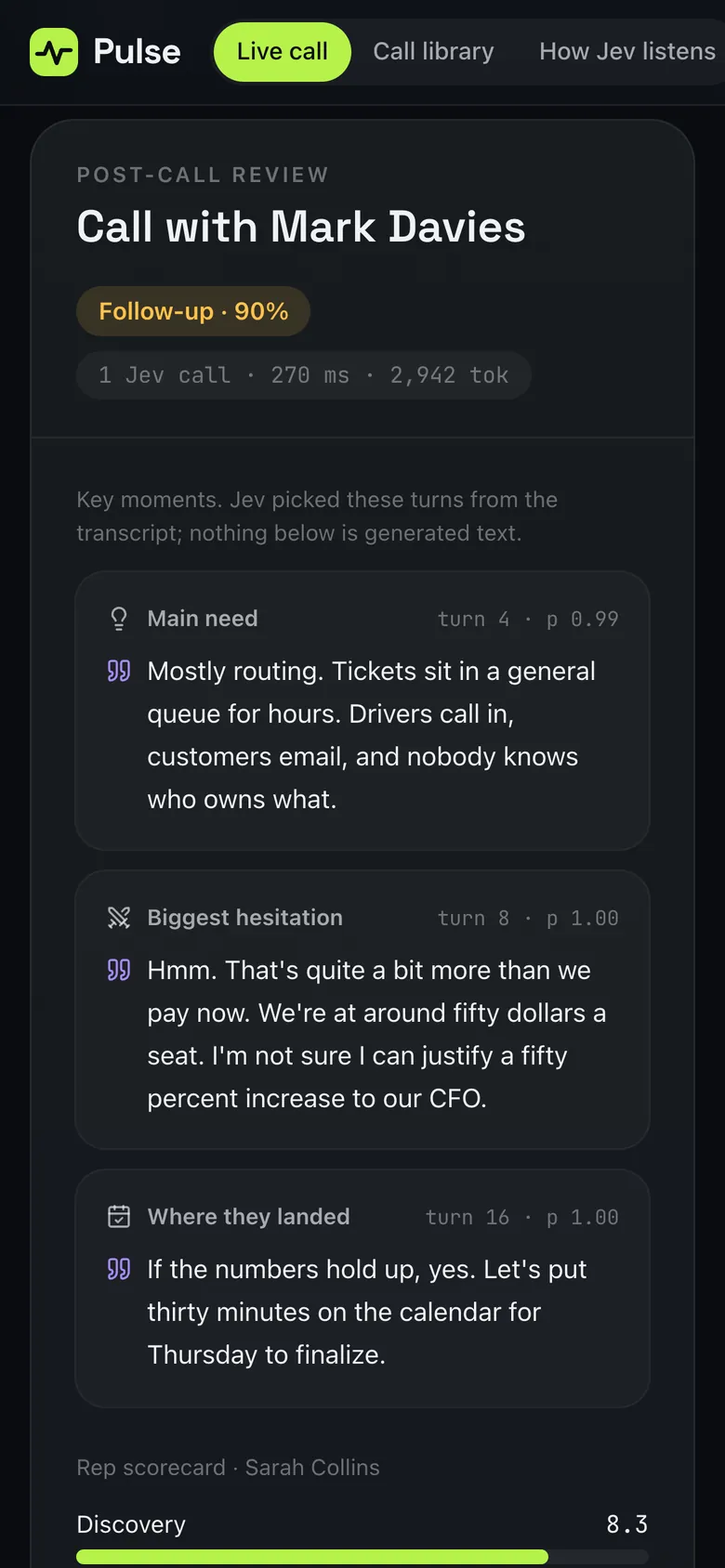
One more request produces the review: the outcome, why a deal stalled, whether a dated next step was agreed, and a four-part rep scorecard. The three key moments are multiple-choice questions whose options are the prospect's own sentences, so the summary quotes the transcript instead of generating text that could drift from it.
Section 04
How It Works
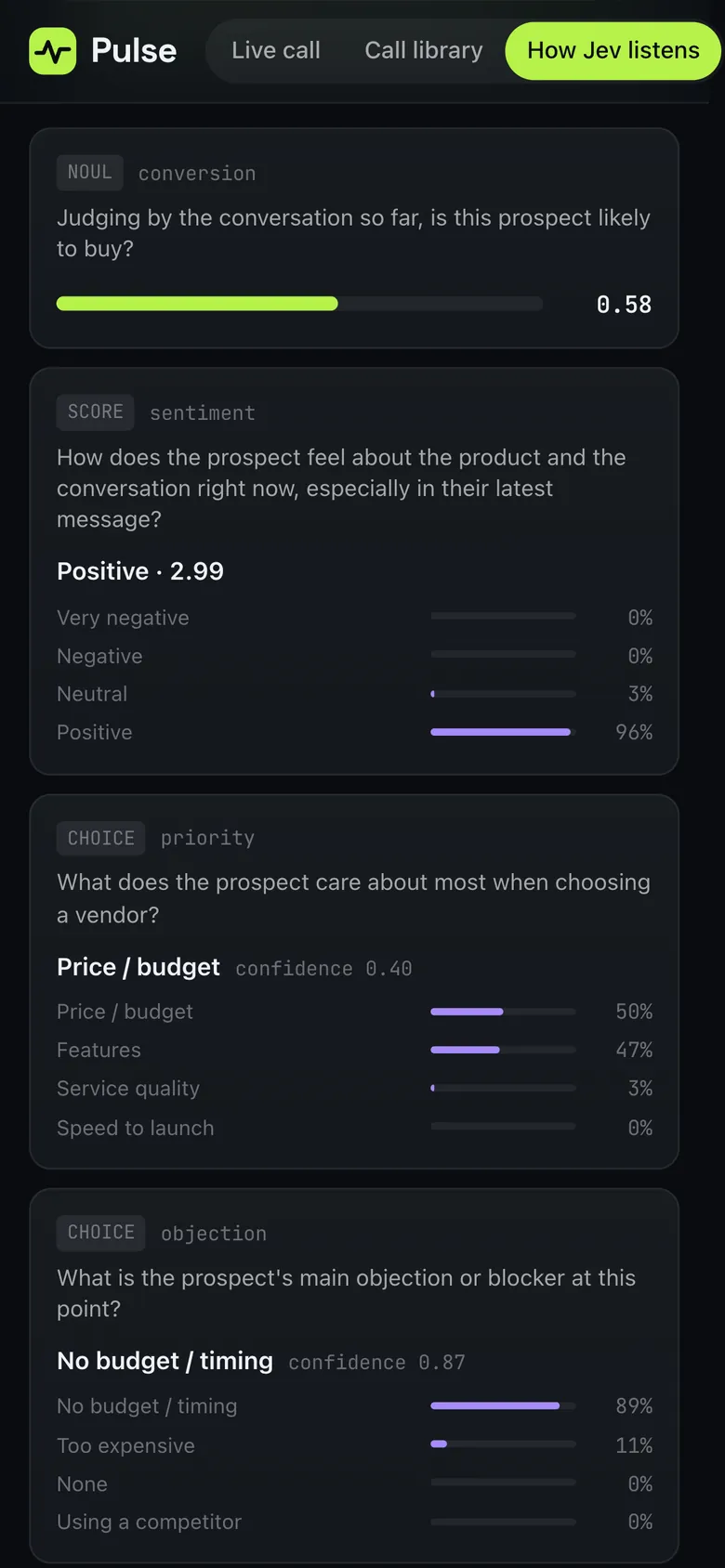
Each request sends the transcript so far as structured state plus all 12 question definitions; the How Jev Listens page lets you scrub to any turn and see exactly what Jev received and every probability it returned. Five scripted demo calls replay at real speed, and a Live mic mode uses the browser's speech recognition for real conversations.
Measured on a full call at real speed, analyses took a median 230 ms, so each one lands within the first word or two of the next sentence and uses 2% to 8% of that sentence's duration. A whole call cost about $0.0014. The LLM lane on this page is a projection from published speeds and prices, not a measured run.