Full-StackShipped2026
The Living City
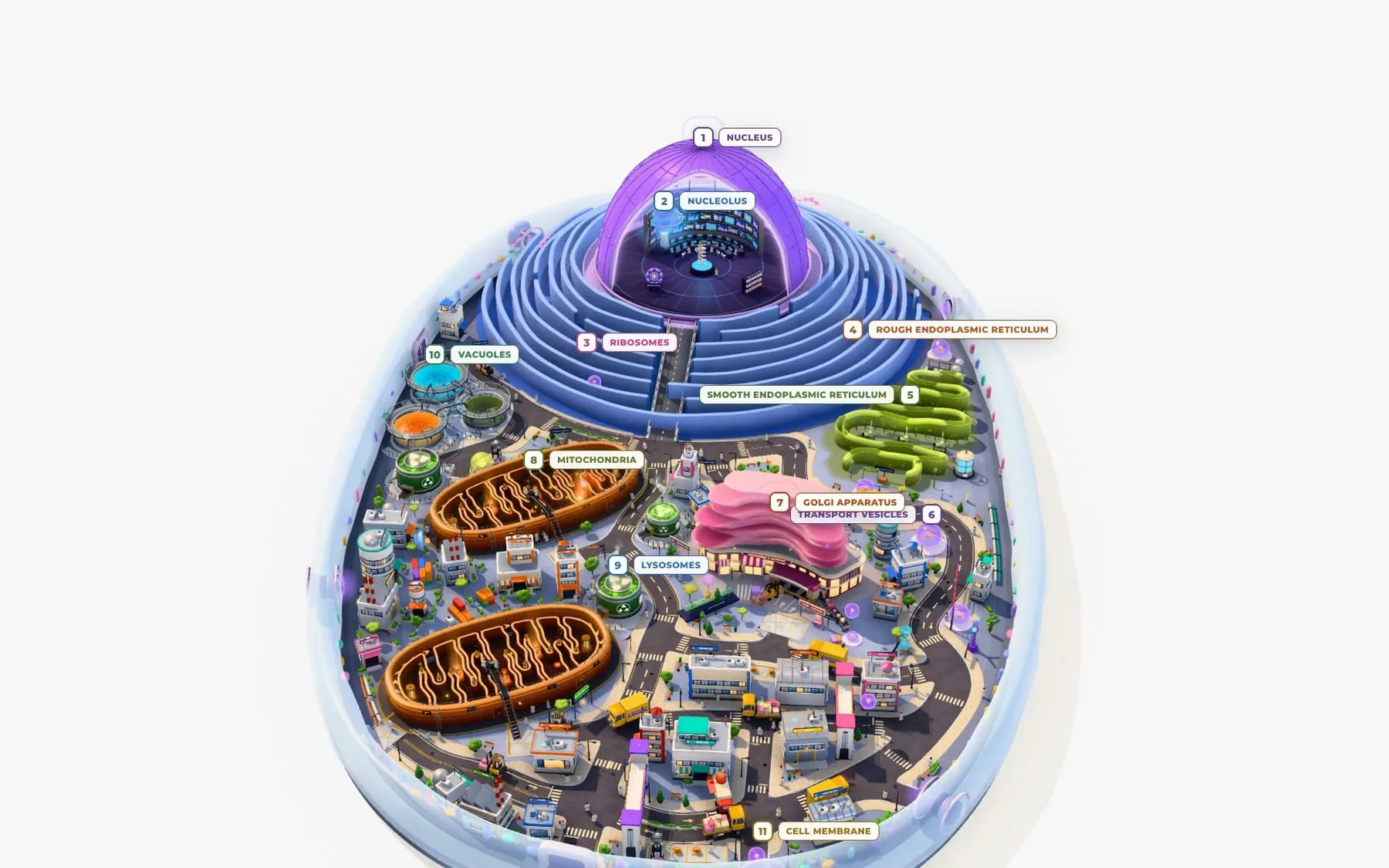
A 3D miniature city inside an animal cell: walk its streets with a scientist guide, explore 11 organelle districts, try a hands-on activity in each and hunt for 24 hidden curiosities.
- 11
- Organelle districts, each with a hands-on activity
- 24
- Hidden curiosities to find
- 108
- Voiced lines for the guide and workers
Section 01
Overview
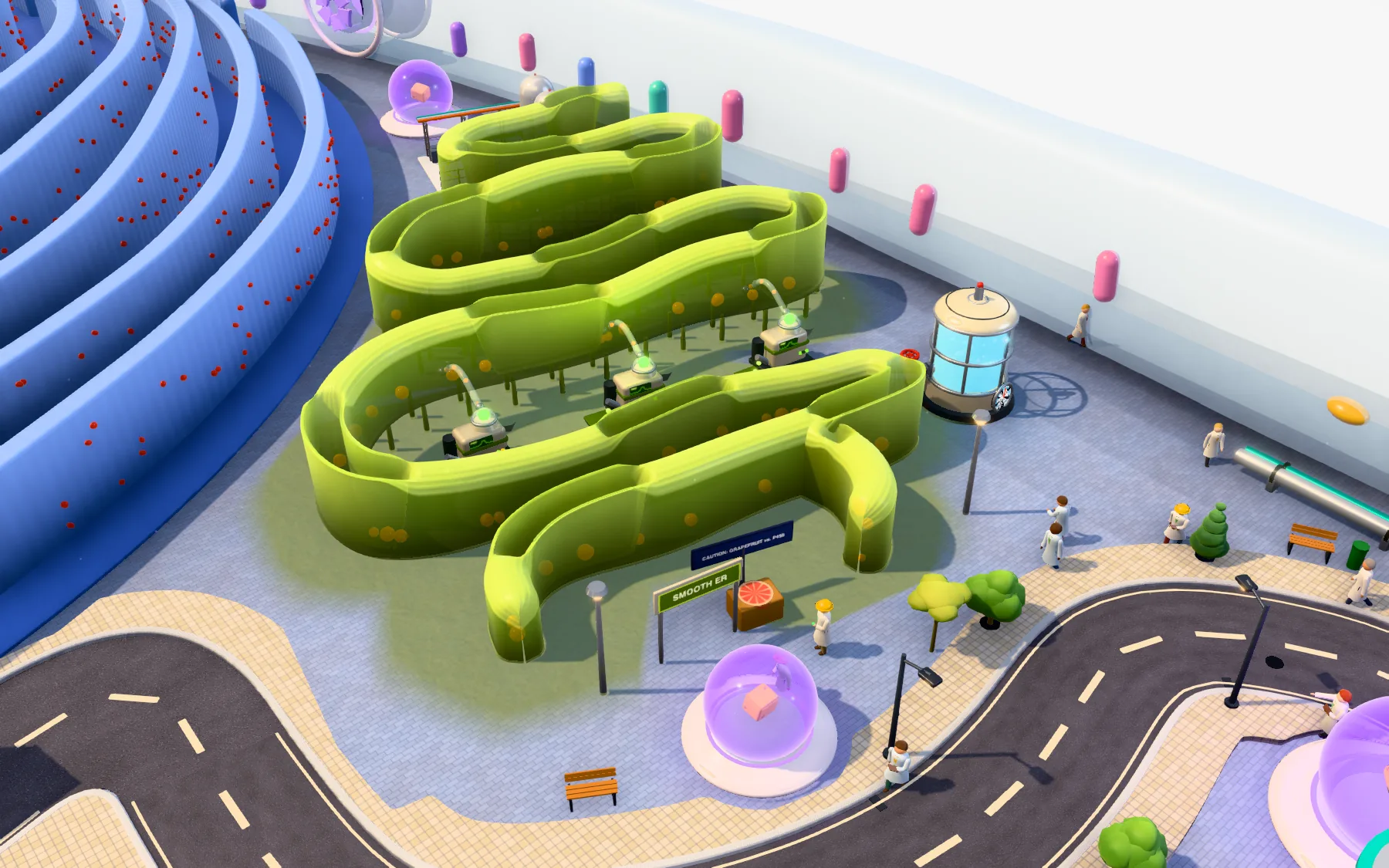
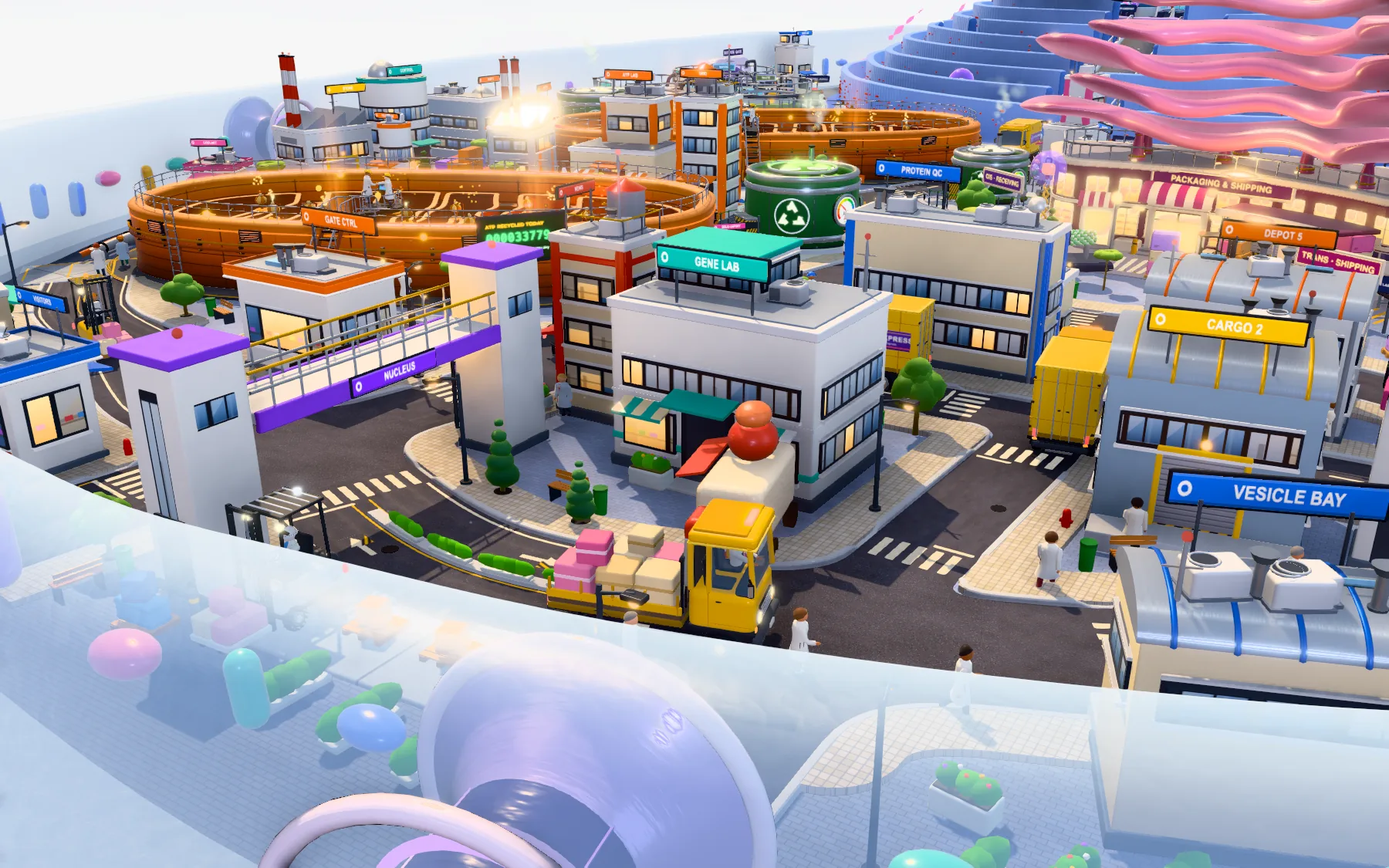
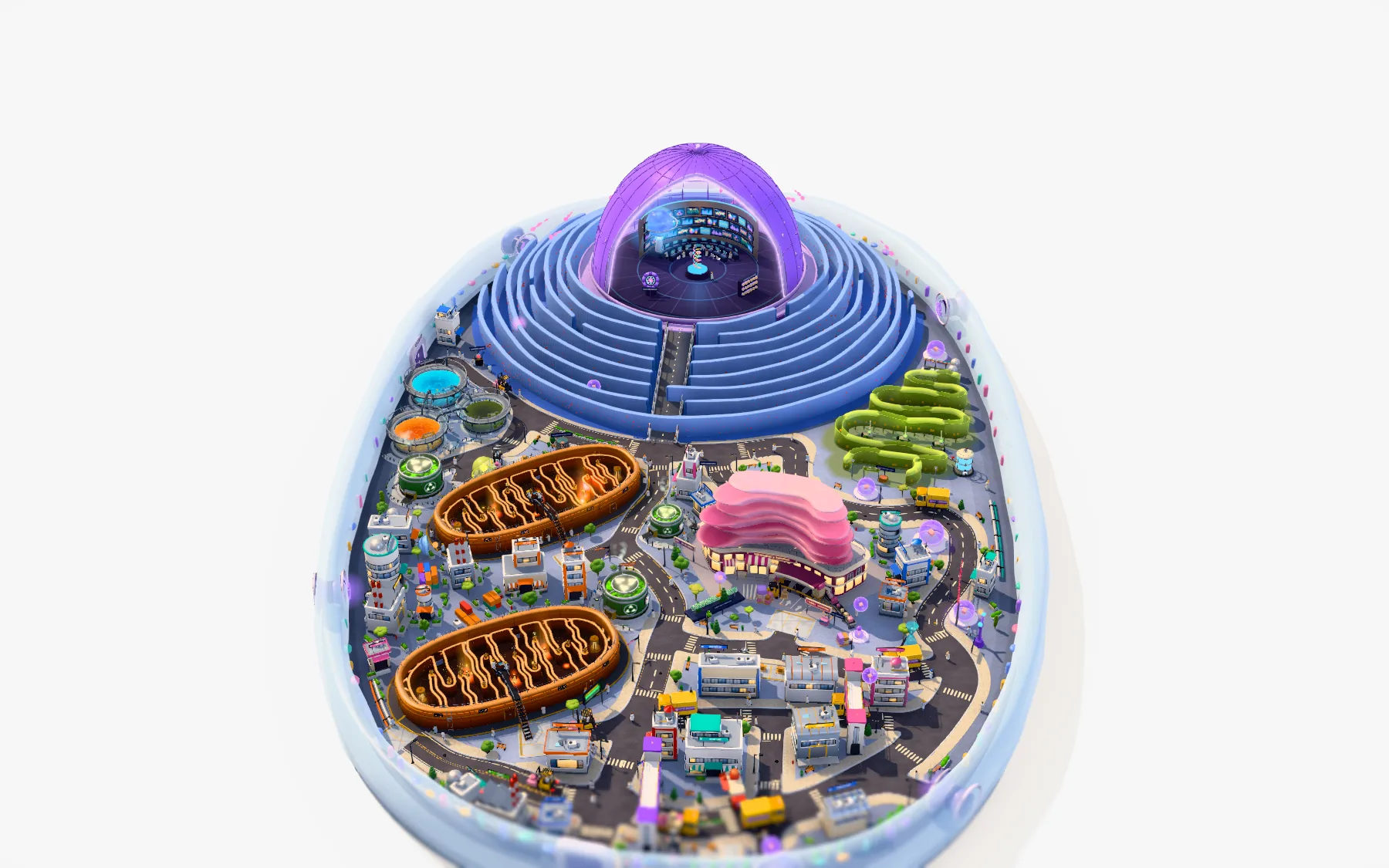
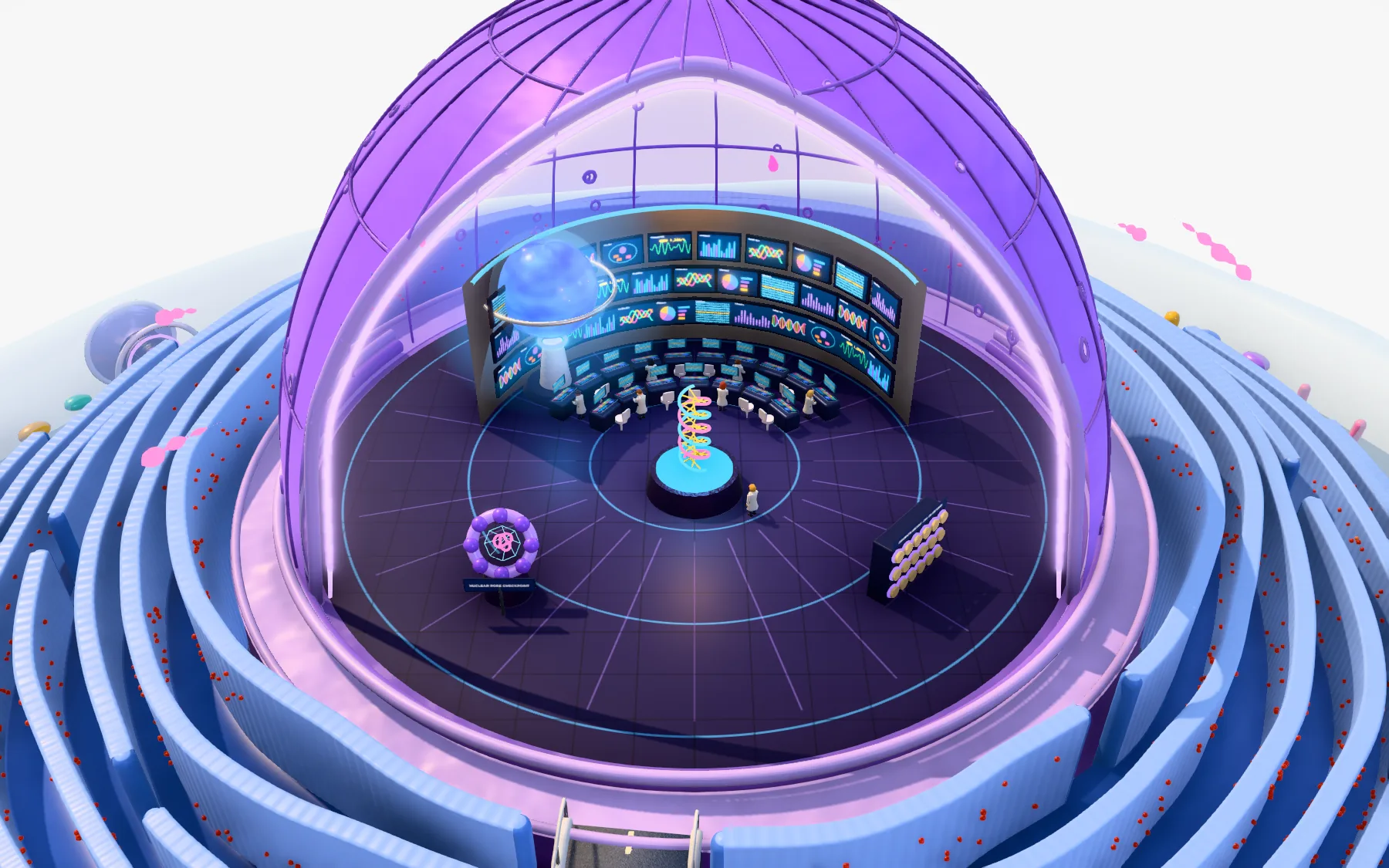
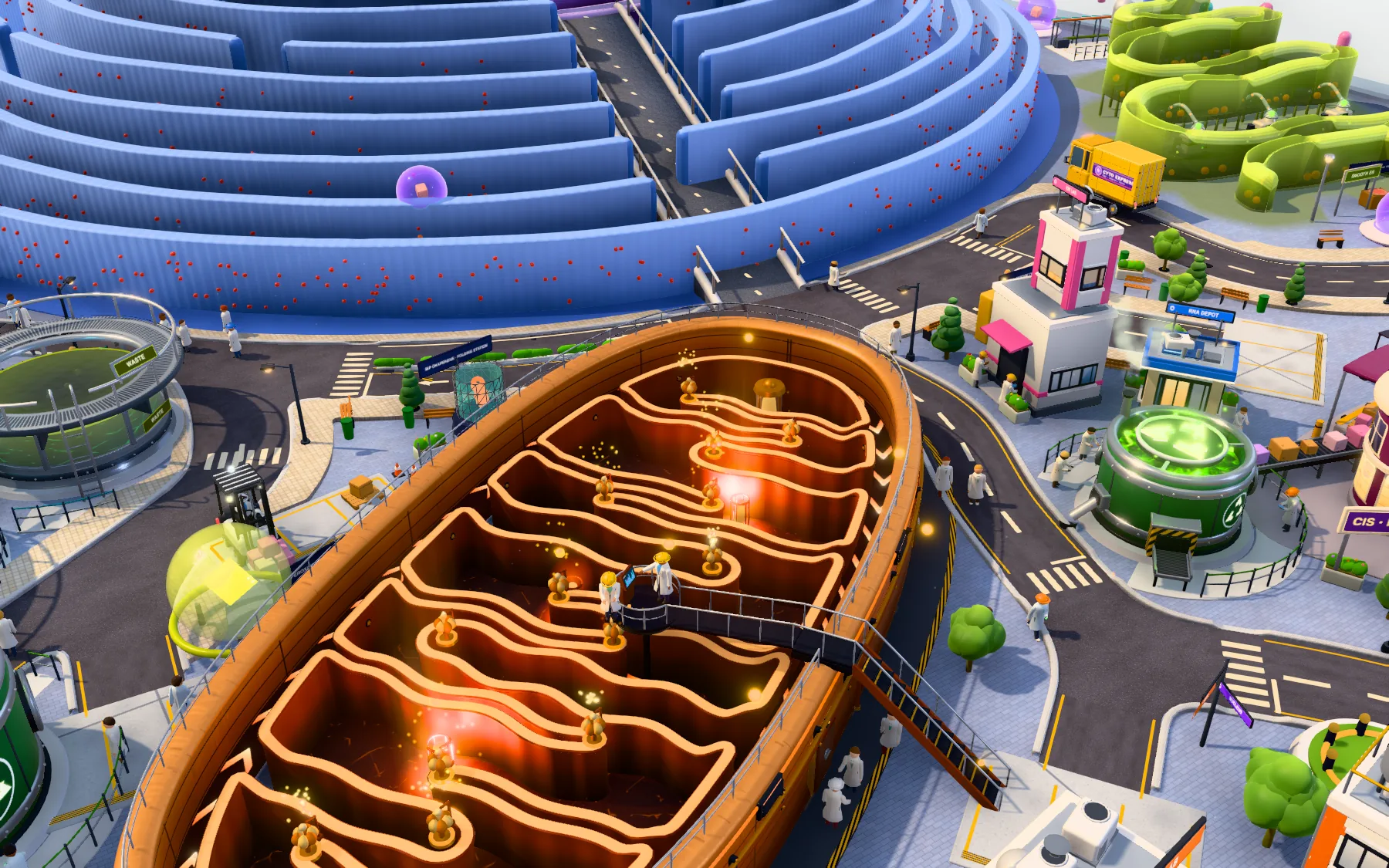
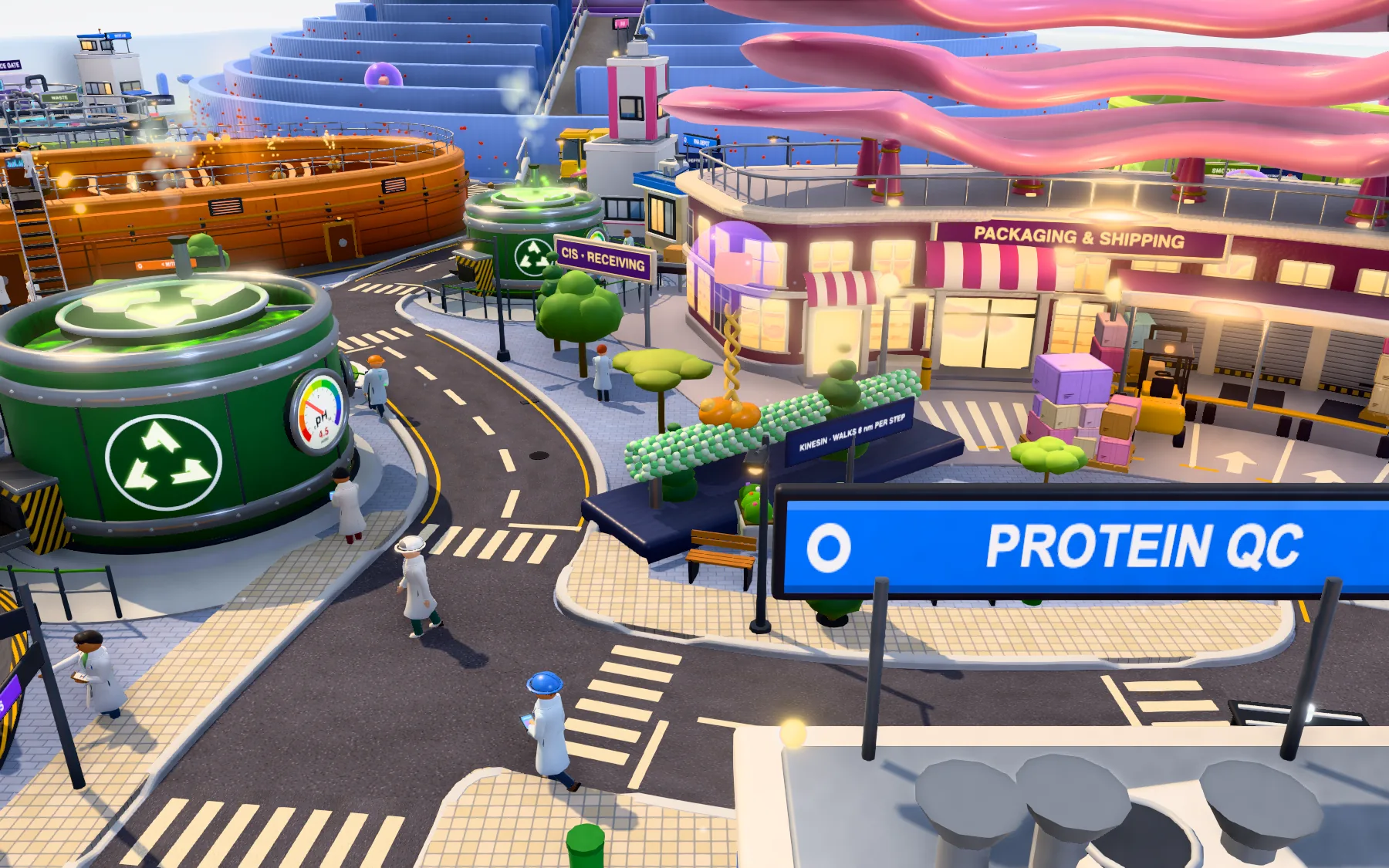
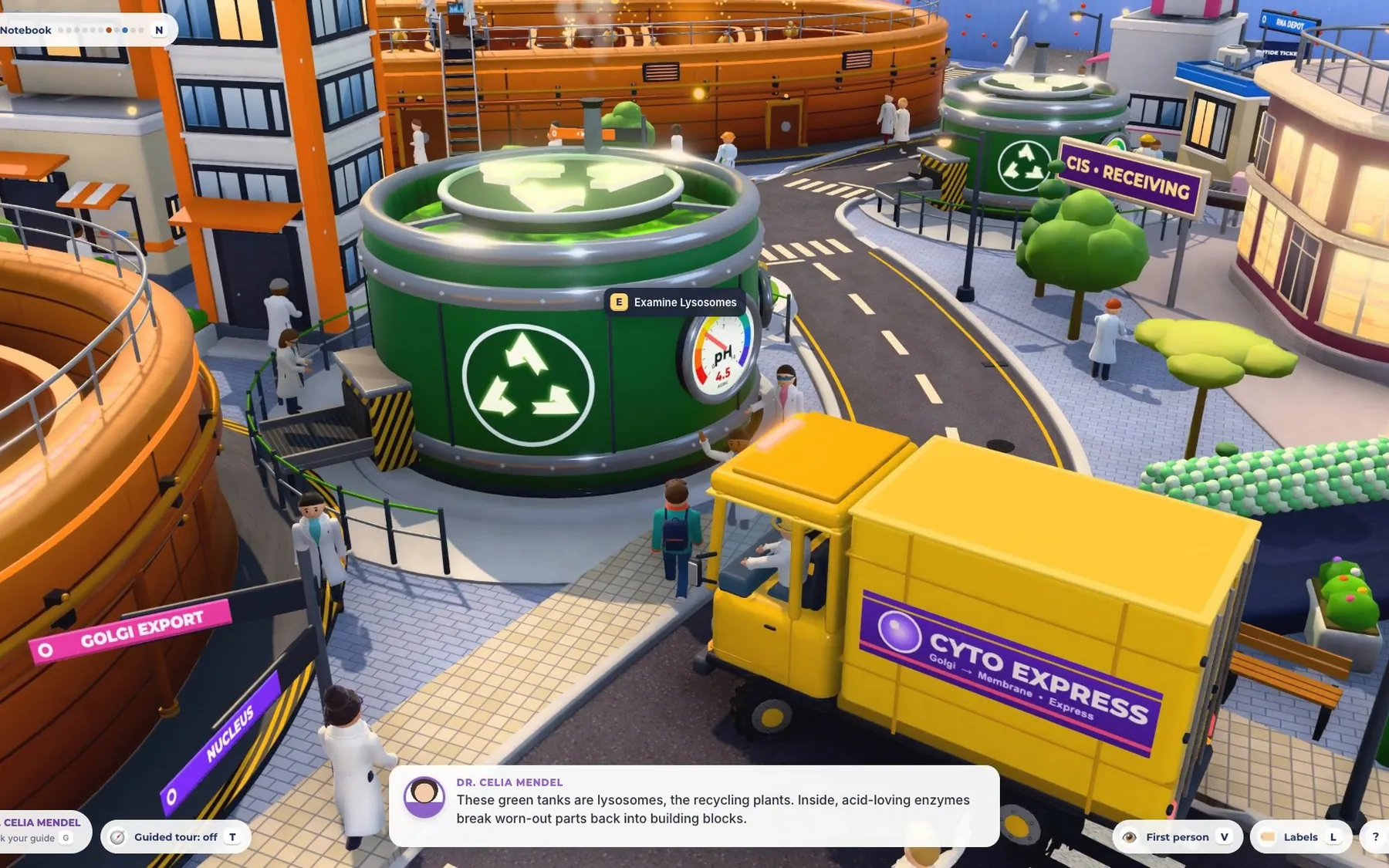
The Living City turns a classic biology poster, the animal cell drawn as a city, into a place you can walk around. Every organelle is a district: the nucleus is a control centre under a violet dome, the mitochondria are power plants, the Golgi apparatus is a packaging and shipping hall, and lysosomes are recycling tanks. Lab-coat workers, delivery trucks and vesicles keep the streets busy.
It is built for intro cell biology students and curious adults. There are no levels or locks: you explore freely, and the reward is curiosity. The opening shot matches the poster, then the camera descends to the front gate and the city is yours.
Section 02
A Miniature You Can Walk
The city is made in Three.js and lit like a hand-built scale model: satin paint, glass and brushed metal under soft studio light, with ambient occlusion, bloom and a tilt-shift blur that makes it read as a miniature. One layout file holds every position, so districts, roads and the membrane gates never drift out of place.
About 140 workers walk the streets, all drawn in 5 draw calls: one instanced, GPU-skinned crowd with per-worker colour, and level of detail that drops far figures from the colour pass. Trucks, staff at their stations and drifting vesicles fill in the rest.
Section 03
Learning by Doing
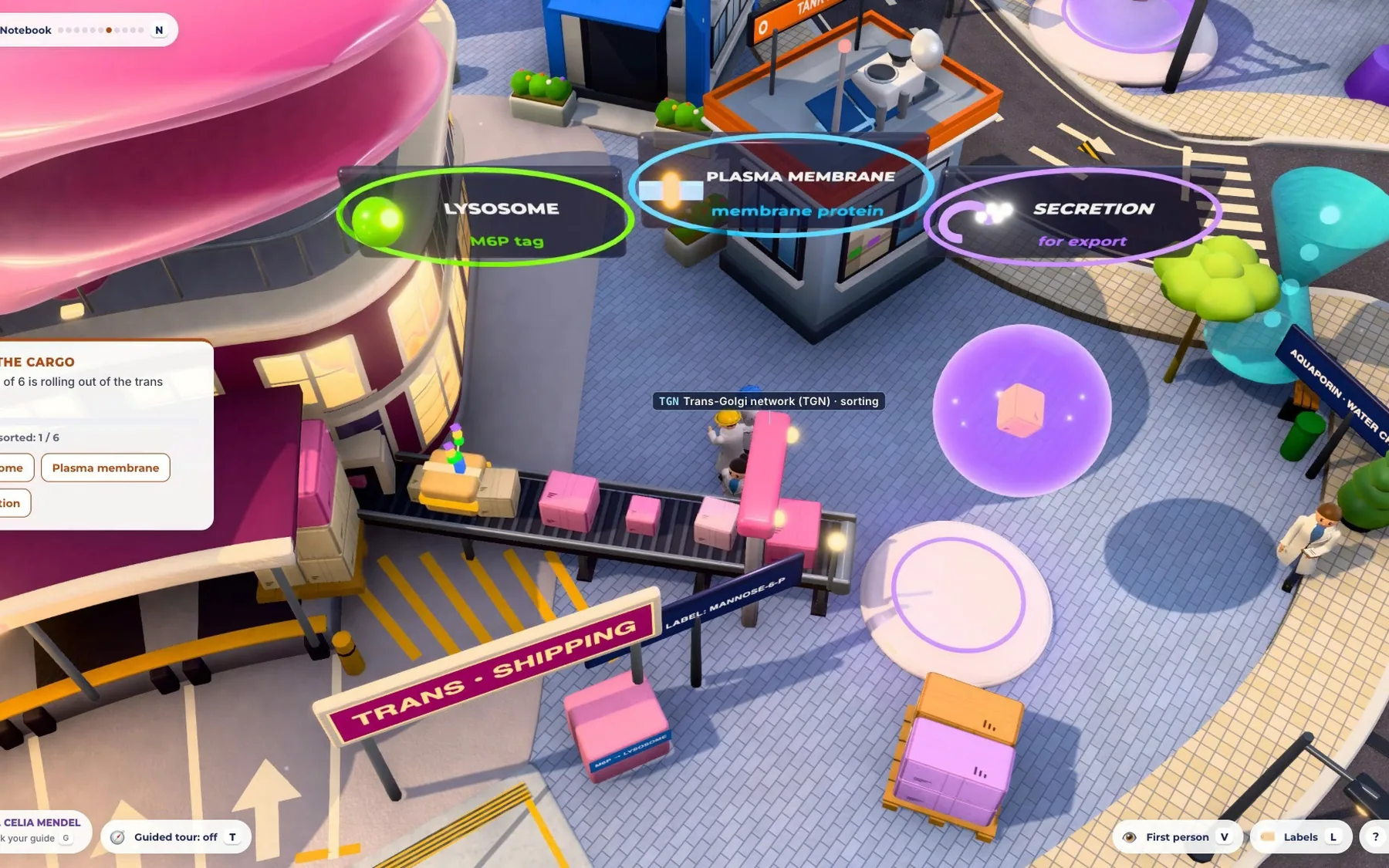
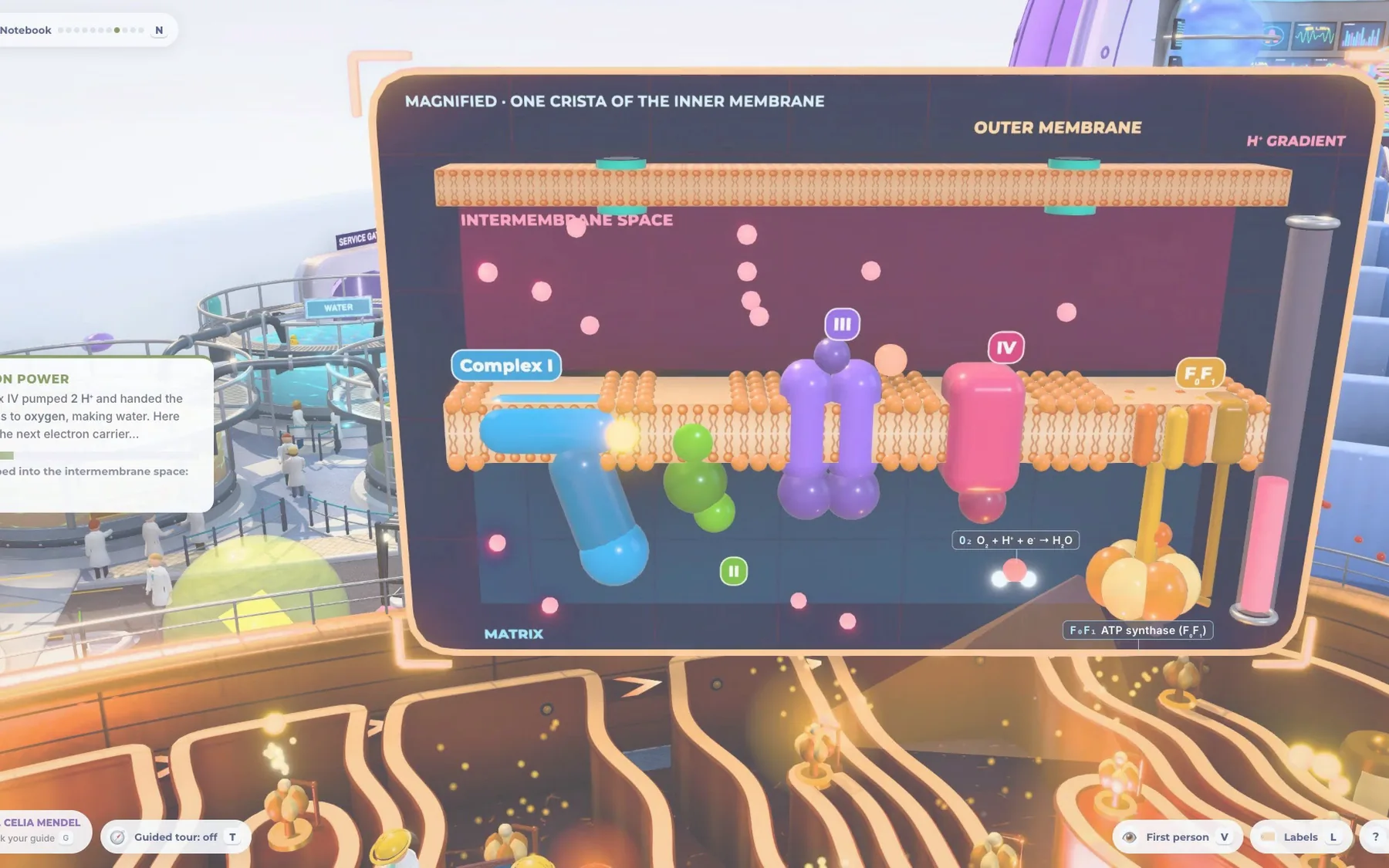
Each of the 11 districts has something to look at closely and something to try. You transcribe a gene at the nucleus console, sort tagged cargo through the Golgi to lysosomes, the membrane or secretion, and pump protons across a crista until ATP synthase spins and releases ATP. The city analogy stays an analogy; the labels, cards and deeper notes on top are accurate science.
Dr. Celia Mendel, a scientist guide, walks with you, explains a place when you ask and offers a guided tour. Her lines and the workers' are 108 voiced lines in 5 voices, generated offline with Gemini text-to-speech and cached by content hash, so only changed lines are regenerated. A field notebook tracks the districts you have visited, the activities you have tried and the 24 curiosities you have found.
Section 04
Built to Run in a Browser
Graphics quality is chosen automatically from three tiers, which change render resolution, shadow map size, ambient occlusion and the tilt-shift pass, and the player can override it. In a headless Chrome capture at 1800 by 1125 on an Apple M4, the full city drew in 198 draw calls, about 2.1 million triangles, at 42 fps.
All sound is generated in code with the Web Audio API: ambience, effects and generative music. A QA script renders every effect offline and checks it against loudness targets (peak at or below -1 dBFS, no DC offset, little energy above 8 kHz). Scripted playtests, headless GPU screenshots and a per-district performance breakdown ran alongside, and the art direction went through 17 recorded review rounds against the reference poster.